Backhoe vs. Excavator: Which is Best for Your Project?
When investing in heavy construction equipment, one of the most common dilemmas contractors and equipment dealers face is choosing between a backhoe and an excavator. Both are powerful, versatile machines, but understanding the backhoe vs excavator debate is crucial for maximizing your ROI and project efficiency.
In this guide, we will break down the key differences and explain why more modern contractors are shifting their focus toward compact solutions like mini excavators.
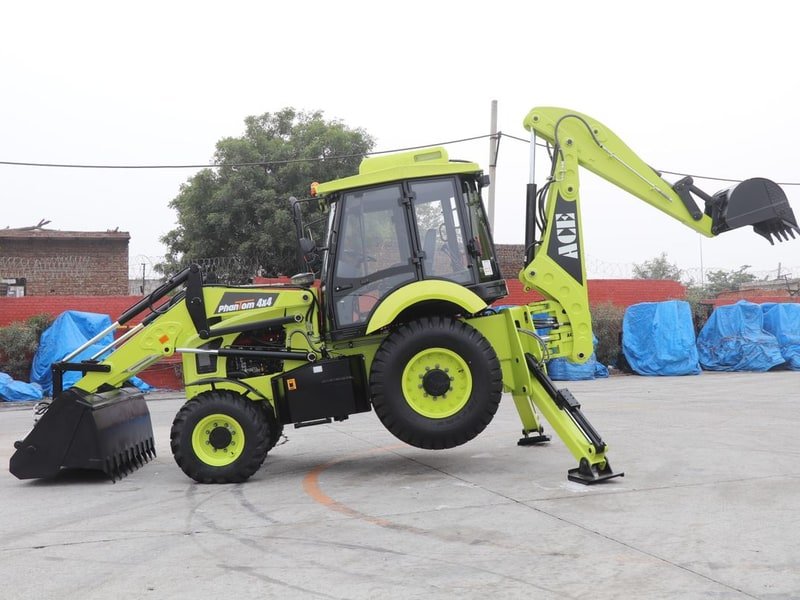
1. The Backhoe Loader: Jack of All Trades
A backhoe loader is essentially a tractor featuring a loader bucket on the front and a backhoe on the rear.
✅ Pros: Highly versatile, wheeled chassis allows for driving on regular roads between job sites.
❌ Cons: Bulky size makes it difficult to operate in tight urban spaces. The wheeled design also struggles in deep mud compared to tracked machines. Additionally, they require a significantly larger initial investment.
2. The Excavator: The King of Digging
Unlike a backhoe, an excavator rotates a full 360 degrees and typically runs on tracks. While large excavators handle massive earthmoving tasks, the real game-changer in today’s market is the mini excavator.
✅ Pros: Exceptional digging power, 360-degree rotation, and tracked stability on rough terrains.
❌ Cons: Cannot be driven on public roads; requires a trailer for transport.
3. Why Mini Excavators Are Winning the Debate
When evaluating backhoe vs excavator for modern projects (such as landscaping, urban construction, and utility trenching), the mini excavator almost always wins. Here is why:
• Unmatched Access: A compact 1-ton or 1.5-ton mini excavator can easily pass through standard backyard gates and work in confined spaces where a backhoe simply cannot fit.
• Cost-Effective: The purchase price and maintenance costs of a mini excavator are just a fraction of a backhoe’s cost.
• Easy Transport: You do not need a massive commercial truck. A standard pickup and trailer can easily tow a 2-ton mini excavator to the job site.
4. The Best Solution for Your Business
If you are looking to expand your equipment fleet or dealership inventory with high-profit-margin machinery, sourcing a high-quality Chinese mini excavator is your best move.
At Yantai Qisheng, we are a leading source factory specializing in compact heavy machinery. We bypass the middlemen to offer you factory-direct pricing on top-tier equipment.
Explore Our Top-Rated Mini Excavators:
👉 QS10 1-Ton Mini Excavator: Perfect for ultra-tight spaces and residential projects. (Features EPA/Euro V Kubota engine options).
👉 QS20 2-Ton Mini Excavator: Delivers the perfect balance of compact size and heavy-duty digging force.
Ready to scale your business? Skip the retail markups. Contact us today to get a free wholesale quote and detailed specifications on our latest mini excavators for sale!
Expanded Guide: Backhoe vs. Excavator
Backhoe vs. Excavator should be based on the work, not only the purchase price. List the required digging depth, reach, lifting capacity, access width, ground conditions and transport limits. Then compare that list with the operating weight and dimensions of each model. A machine that is too small will slow production, while an oversized machine can be difficult to move and may not fit the site.
Calculate the total cost of ownership. Add the machine price, financing, insurance, freight, duties, attachments, fuel, maintenance, tracks, storage and operator training. Compare those costs with rental or leasing if the machine will only be used occasionally. For commercial work, estimate annual hours and revenue before deciding whether buying produces a better return than renting.
For a used machine or a new import, inspect the engine, hydraulic system, undercarriage, boom, arm, pins and electrical components. Check service records, hour meter history and whether the machine has been repaired after an accident. Confirm spare-parts availability, warranty terms, technical manuals and local service support. A lower purchase price is not a good deal if parts are difficult to obtain.
Compare mini excavator models, review our sizes guide, and contact Qisheng Machinery for factory-direct quotation and export support.
Additional buying note: The best machine is the one that matches the actual workload and has dependable parts support. Ask for a detailed quotation that separates the machine, attachments, freight, insurance and optional equipment. Confirm warranty coverage, delivery time, spare-parts availability and technical documentation. For imported equipment, review emission and certification requirements before ordering. Calculate cost per working hour rather than comparing only the purchase price.
Final takeaway: Always confirm the machine manual, attachment rating and local regulations before making a decision. Write down the required dimensions, working weight, hydraulic flow, transport limits and service intervals, then compare them with the exact model specification. If the project changes, reassess the machine rather than forcing it beyond its safe working range. For model selection, spare parts, factory-direct pricing and configuration guidance, review our product pages and speak with the Qisheng Machinery team before ordering.
Looking for a New Mini Excavator?
Rental and used equipment can solve a short-term need, but a new machine gives you warranty coverage, dependable uptime, parts support, attachment options and finance choices. Compare your access width, digging depth, lifting capacity and transport limits with our new machines.