Best Mini Excavator for Home Use and Landscaping
News | September 18, 2026
Quick Answer: What Is the Best Mini Excavator for Home Use?
A 1–1.5 ton mini excavator is often best for home use because it fits through gates, causes less ground disturbance and can be transported on a smaller trailer.
For larger landscaping, stump removal or deeper trenches, a 1.8–2.5 ton machine may be more productive if access and transport allow.
Best Size for Home Landscaping
1–1.5 ton machines suit gardens, paths and small trenches. Larger properties may benefit from a 1.8–2 ton model.
Attachments for Home Projects
Buckets, augers, thumbs and breakers cover many landscaping tasks. Confirm hydraulic compatibility before buying.
Buying or Renting
Renting suits one-off projects, while buying can make sense for repeated work or a landscaping business.
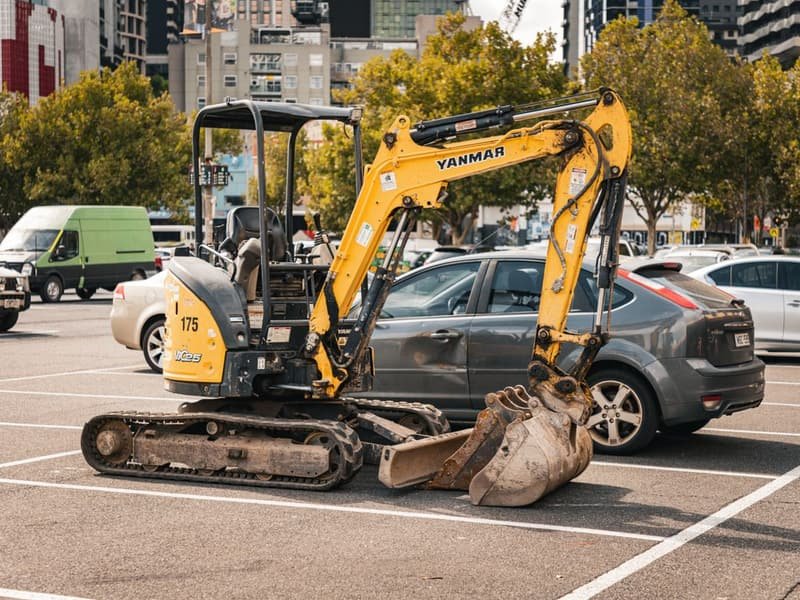
Frequently Asked Questions
What size mini excavator is best for landscaping?
A 1–1.5 ton machine is often best for tight landscaping, while 1.8–2.5 ton models suit larger projects.
Can a mini excavator fit through a garden gate?
Some compact models can, but measure the actual opening, blade width and attachment clearance.
Is a mini excavator good for homeowners?
It can be useful for drainage, landscaping, stump removal and small excavation when access and transport are suitable.
Explore Our Mini Excavator Models
Compare compact excavators from 1 to 2.5 tonnes by size, lifting capacity, digging depth and project suitability.
Need Help Choosing the Right Machine?
Send us your project location, access width, digging depth and lifting requirements. We can recommend a suitable mini excavator model and prepare a factory-direct quote.
This article is for general information only. Confirm all dimensions, ratings and procedures against the exact machine manual before operation.
Expanded Guide: Best Mini Excavator for Home Use and Landscaping
Best Mini Excavator for Home Use and Landscaping should be based on the work, not only the purchase price. List the required digging depth, reach, lifting capacity, access width, ground conditions and transport limits. Then compare that list with the operating weight and dimensions of each model. A machine that is too small will slow production, while an oversized machine can be difficult to move and may not fit the site.
Calculate the total cost of ownership. Add the machine price, financing, insurance, freight, duties, attachments, fuel, maintenance, tracks, storage and operator training. Compare those costs with rental or leasing if the machine will only be used occasionally. For commercial work, estimate annual hours and revenue before deciding whether buying produces a better return than renting.
For a used machine or a new import, inspect the engine, hydraulic system, undercarriage, boom, arm, pins and electrical components. Check service records, hour meter history and whether the machine has been repaired after an accident. Confirm spare-parts availability, warranty terms, technical manuals and local service support. A lower purchase price is not a good deal if parts are difficult to obtain.
Compare mini excavator models, review our sizes guide, and contact Qisheng Machinery for factory-direct quotation and export support.
Additional buying note: The best machine is the one that matches the actual workload and has dependable parts support. Ask for a detailed quotation that separates the machine, attachments, freight, insurance and optional equipment. Confirm warranty coverage, delivery time, spare-parts availability and technical documentation. For imported equipment, review emission and certification requirements before ordering. Calculate cost per working hour rather than comparing only the purchase price.
Looking for a New Mini Excavator?
Rental and used equipment can solve a short-term need, but a new machine gives you warranty coverage, dependable uptime, parts support, attachment options and finance choices. Compare your access width, digging depth, lifting capacity and transport limits with our new machines.