Counterbalance Forklift Guide for Buyers
News
Quick Answer
A counterbalance forklift carries forks ahead of the front axle and balances their load with the truck structure and rear counterweight; assess load center and aisle fit before buying.
Where Counterbalance Trucks Excel
This familiar forklift layout gives direct fork access to pallets at receiving docks, loading bays and open warehouse lanes. It can approach a load without support legs projecting around it. The trade-off is the turning envelope: a counterbalance truck may require more space than a purpose-built narrow-aisle machine, especially with a long pallet.
The truck's rear weight is part of a carefully rated system, not an invitation to add ballast. Attachments, mast choice and load dimensions affect usable capacity. Request a data plate for the actual machine and configuration.
Evaluate Capacity and Maneuvering Together
Record the loaded pallet weight and its depth from the fork face. Then determine the highest lift, clear aisle, door height and any container entry. A forklift that lifts the pallet on an open floor may not be able to turn into the rack position safely. Compare turning radius and aisle-width data under the same pallet assumptions.
| Buying input | Why it matters |
|---|---|
| Load weight and center | Establish rated-capacity requirement |
| Pallet length | Changes forward reach and turning envelope |
| Rack level | Affects mast and residual-capacity review |
| Floor and yard | Determines tire and power suitability |
Use site dimensions rather than guessing from the nominal “2 ton” or “3 ton” label. A front-mounted attachment can change capacity significantly even when the base truck looks identical.
Choose Power and Service Support
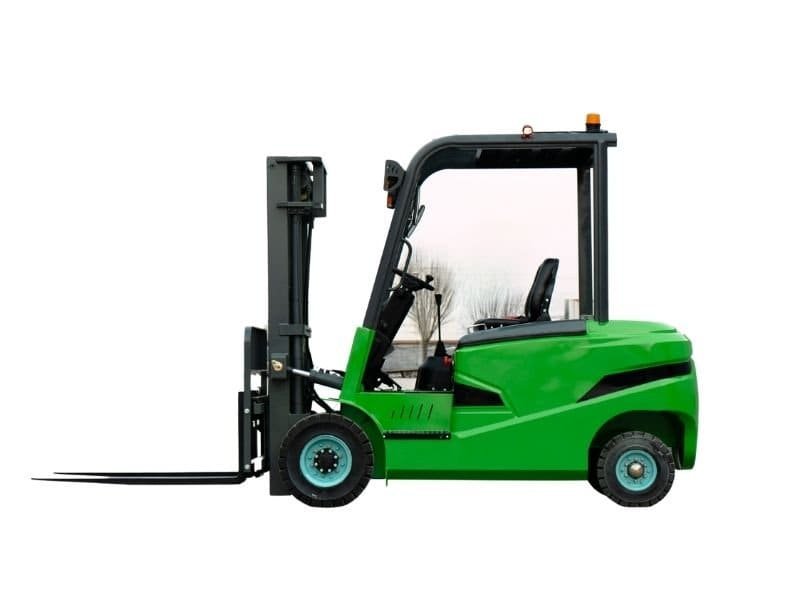
Electric counterbalance trucks can be attractive indoors if charging space and electrical supply are ready. Diesel units may suit appropriate outdoor work, provided ventilation rules and local emissions requirements are met. The 3 ton diesel forklift is a model reference to compare against your actual load profile.
Ask for mast, fork and tire details on the quotation, along with lead time for wear parts and a parts diagram tied to the machine's serial number. During evaluation, consider the entire route, including dock boards and gradients, not only the lift point. The truck type should follow the work, rather than forcing the workflow around a low sticker price.
Check the Whole Loading Route
Counterbalance design is valuable when the truck must approach a pallet without support legs projecting in front, but that does not guarantee fit at the dock or rack. Measure door openings with the mast lowered, turning room at each corner and clearance beside parked trailers. Include the loaded pallet's overhang: the aisle that fits an empty machine may be too narrow for its actual load.
Suppose a warehouse uses a truck indoors in the morning and outdoors at the dock in the afternoon. The selection then depends on both floor surfaces, local ventilation, duty hours and the charging or refueling arrangement. Rather than asking whether a diesel or electric counterbalance truck is “better,” send suppliers this work pattern and ask them to explain the trade-offs for a specific configuration.
Ask for the truck's capacity at the intended load center and lift height, not only its nominal tonnage. If a side shifter, clamp or long forks are part of the order, the approved rating must reflect those options. This check keeps a flexible machine from being mistaken for an unlimited one.
Frequently Asked Questions
Is rear counterweight the only stability factor?
No. Load position, truck geometry, mast height, attachments, floor and operator actions all matter.
Can a counterbalance forklift work in every warehouse?
No. Its turning and aisle needs, floor loading and ventilation must fit the particular building.
Discuss Your Forklift Requirements
Send your load weight, lift height, aisle width, duty hours and destination to Qisheng. Request a configuration and quote.