Diesel Forklift Guide for Outdoor Work
News
Quick Answer
A diesel forklift can serve suitable outdoor or well-ventilated material-handling work, but buyers must verify emissions requirements, surface, capacity and service access.
Typical Diesel Applications
Engine-powered counterbalance forklifts are common in yards, loading areas and mixed industrial operations. Diesel power may suit long shifts where refueling is practical and electrical charging infrastructure is limited. That does not make it appropriate for enclosed rooms. Ventilation, emissions policy and local legal requirements should be checked before a site commits to an engine-powered fleet.
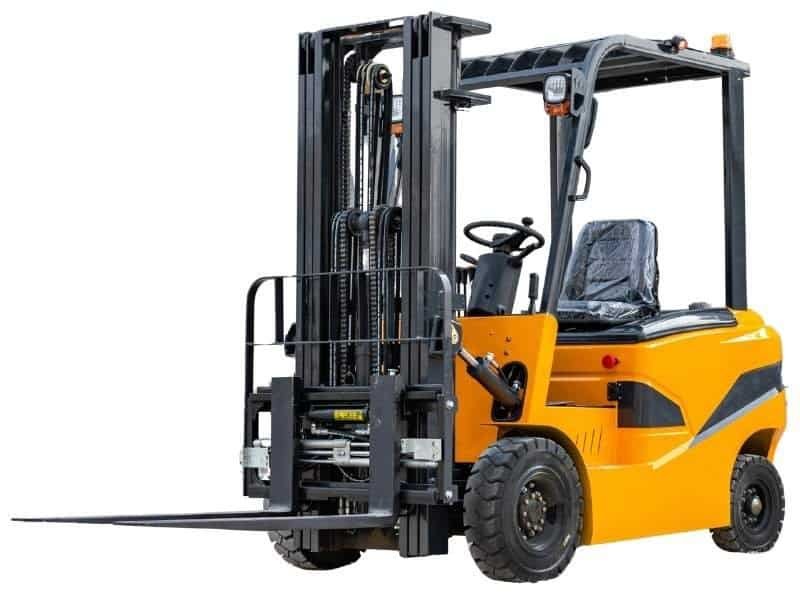
The 2 ton diesel forklift illustrates a nominal 2,000 kg product class. Whether its exact configuration can handle a long pallet or reach a specified rack level depends on the data plate and selected mast.
Define the Worksite Envelope
Describe the heaviest load and its center, maximum lift, narrowest aisle, ground firmness, grade and weather exposure. Pneumatic-type tires can be useful on some outdoor surfaces, yet a standard industrial truck is not automatically a rough-terrain machine. Confirm the manufacturer's surface limitations and tire option.
| Site issue | Purchase check |
|---|---|
| Enclosed loading bay | Ventilation and emissions compliance |
| Long outdoor route | Fuel use and service interval planning |
| Uneven surface | Tire and truck suitability |
| High stack | Residual capacity at required height |
Add operator visibility, noise and pedestrian separation to the review. A higher advertised engine rating does not prove a higher safe lifting capacity.
Compare Ownership, Not Only Price
Ask for the engine designation, service schedule, replacement filters, warranty terms and local parts pathway. Estimate fuel and maintenance over the hours you actually expect to use the truck. Obtain overall dimensions and shipping weight if importing; these can affect freight and unloading costs.
If indoor work dominates, compare an electric alternative on charging, duty cycle and total site cost. A supplier should explain why the quoted mast, forks and tires suit your job. Treat the catalogue as a starting point and confirm every critical value on the final quotation and machine data plate.
Model the Outdoor Shift and Service Route
Describe where the truck will work during a normal day: paved yard, dock approach, covered loading bay or enclosed warehouse. This matters because an engine-powered truck's exhaust and the site's ventilation must be assessed together. “Mostly outside” is not precise enough if the machine also spends long periods inside a closed building. Apply local occupational and emissions requirements rather than assuming an open door solves the issue.
Fuel access, weather protection and maintenance support belong in the specification. Ask how many hours the truck will operate between service opportunities, which engine and filter parts are available locally, and how faults will be diagnosed after export. Compare those answers with the exact quoted model, not a different engine option shown online.
Use the heaviest real pallet and highest placement to check the approved capacity plate, then check tire and ground suitability for the yard. A diesel power source can be convenient for long outdoor shifts, but it does not make a standard warehouse chassis suitable for soft, broken or steep terrain. Where the ground is the limiting factor, evaluate purpose-built rough-terrain equipment separately.
Frequently Asked Questions
Can a diesel forklift be used indoors?
Do not assume so. Assess ventilation, emissions and applicable rules with qualified site personnel before any enclosed use.
Does diesel power mean higher lift capacity?
No. Capacity is determined by the specific truck's approved configuration and data plate, not the fuel type alone.
Discuss Your Forklift Requirements
Send your load weight, lift height, aisle width, duty hours and destination to Qisheng. Request a configuration and quote.