Forklift Battery Types and Selection
News
Quick Answer
A forklift battery should be selected for the truck's voltage, duty cycle, charger and site practices; lithium and lead-acid systems have different operating requirements.
Match the Battery to the Truck
Battery voltage and physical fit must match the approved truck design. The battery can also be part of the machine's weight and stability configuration. Do not substitute a different chemistry or pack based solely on a similar connector. Ask the truck and battery suppliers for written compatibility and any required charger or control changes.
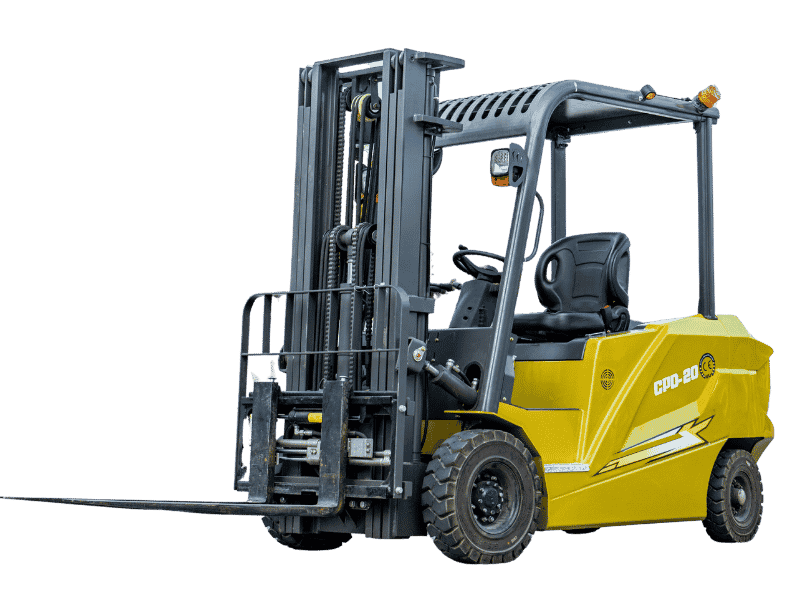
The 2 ton electric forklift is an equipment reference; its exact supplied battery and charger must be confirmed on the quotation.
Size the Duty Cycle
Record working hours, travel distance, lifting frequency, break windows and shift count. A site with one moderate shift has a different energy plan from continuous multi-shift operation. Battery capacity claims should state the test assumptions; real runtime depends on work and environment.
| Selection input | Why it matters |
|---|---|
| Truck approval | Electrical and weight compatibility |
| Shift pattern | Capacity and charge timing |
| Charger | Chemistry and output match |
| Service access | Repair and replacement pathway |
Lead-acid systems may require specific watering and ventilation procedures. Lithium systems may allow different charge scheduling but depend on their approved battery-management and charger arrangement. Follow the manufacturers' instructions for the exact system.
Plan the Charging Area
Site managers should assess electrical supply, traffic separation, ventilation where required and emergency provisions. Trained staff need the correct procedure for connecting, charging and inspecting the equipment. In U.S. workplaces, review OSHA's electric truck information along with applicable rules and manufacturer instructions.
Compare acquisition, charger, maintenance, downtime and eventual replacement costs. The cheapest pack may not be the lowest-cost solution if it cannot support the actual working hours.
Compare Batteries as Installed Systems
A battery quotation is not complete without the truck model, voltage, physical fit, connector, charger and battery-management requirements. Two batteries with similar capacity labels may not be interchangeable in a particular truck. Confirm compatibility with the equipment maker before replacing chemistry or changing charger arrangements.
Estimate demand from the actual shift: travel distance, lifting frequency, idle time, breaks and whether trucks share a charger. A battery that lasts one light demonstration may not cover a peak receiving period. Ask the supplier to state the duty-cycle assumptions behind its proposed battery, and plan where charging can happen without blocking a forklift or pedestrian route.
Safety procedures differ by battery system. Charging, handling, ventilation and emergency measures must follow the manufacturer's instructions and local requirements. For cost comparison, include the battery, charger, electrical installation, maintenance, replacement plan and downtime rather than judging solely by initial purchase price. A battery decision is part of the whole fleet and site design.
Frequently Asked Questions
Can I swap lead-acid for lithium directly?
Not automatically. Confirm truck, weight, charger, controls and manufacturer approval first.
Does battery capacity guarantee shift length?
No. Load, travel, lifting, temperature and charging practice affect runtime.
Discuss Your Forklift Requirements
Send your load weight, lift height, aisle width, duty hours and destination to Qisheng. Request a configuration and quote.