Forklift Capacity: Reading the Data Plate
News
Quick Answer
Forklift capacity on the data plate is a rated load for specified conditions, not a blanket promise for every mast height, attachment and pallet shape.
Read Beyond the Headline Tonnage
A product title may say “2 ton forklift,” but the machine's plate specifies the applicable rating and load center. Extra mast height or an attachment can change the permissible load. Before a purchase, send the supplier your actual pallet weight and depth, then ask for approved capacity at the maximum working height.
The capacity plate should be legible on the delivered truck. If it does not match the quoted mast or installed attachment, resolve the discrepancy before work begins.
Build a Capacity Case
Include normal and maximum loads separately. Record packaging, the center of gravity if known, the fork entry direction and the highest placement point. A long crate may require a different capacity discussion from a standard compact pallet of the same weight.
| Input | Capacity implication |
|---|---|
| Load weight | Base requirement |
| Load-center distance | Changes forward moment |
| Lift height | May change residual rating |
| Attachment weight | Uses part of truck capacity |
Do not buy exactly at a rough estimated maximum and assume every future load will match. Planning for real variation is different from using an unauthorized overload margin.
Compare Model Data Correctly
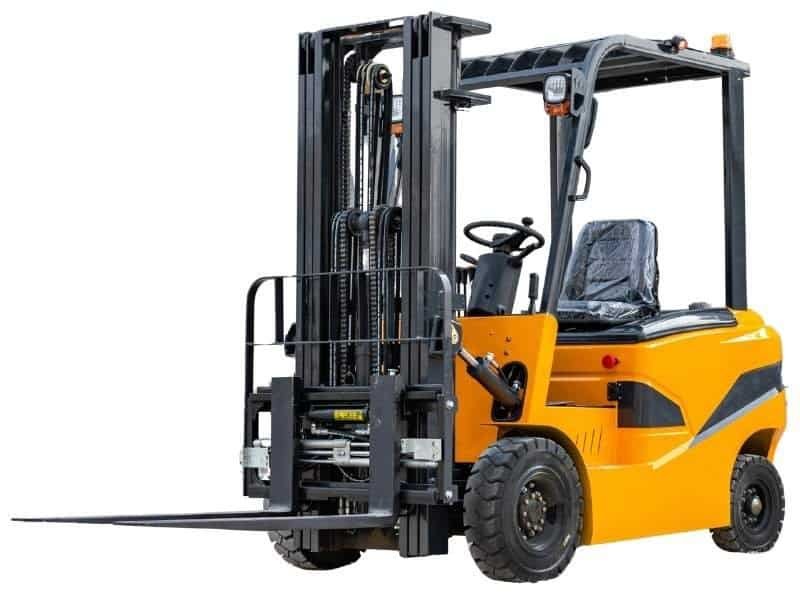
Request each candidate's plate information in the same configuration and units. A 2 ton diesel forklift and 2 ton electric forklift should be compared at the same load center and height, not only by their shared “2 ton” label. Also check aisle, floor and power fit.
In the United States, OSHA's powered industrial truck rule addresses nameplates and safe operation. For an unusual load, get competent manufacturer guidance. An operator should never test whether an unapproved load “seems liftable” as a substitute for rating information.
Build a Capacity Envelope, Not a Single Number
A purchase specification should list several real loads: the heaviest compact pallet, the longest load, any attachment-handled item and the pallet placed at the highest rack position. For each, record weight, dimensions, expected center of gravity and lift height. The approved truck configuration must cover the required cases; a headline 2 ton or 3 ton label is only the start of that comparison.
Check that the data plate corresponds to the mast, forks and attachment actually delivered. Side shifters, clamps and longer forks can change the effective load position or add mass. Do not assume the original plate remains correct after a modification. Request written manufacturer-approved capacity information when the configuration changes.
Capacity is not a target to use without margin in every condition. Pallet damage, uncertain weights, uneven surfaces and restricted visibility create separate operating risks. The decision to lift a particular load belongs to trained personnel following the equipment instructions and workplace rules. A buyer's role is to provide accurate load cases so the right machine can be selected.
Ask for a Capacity Answer in Writing
Send a supplier one fully described load case: weight, length and width, center of gravity if known, fork or attachment arrangement and height of placement. Ask them to identify the truck configuration and the approved rating that covers it. A response that repeats only the nominal tonnage has not answered the question. If the exact load is unknown, state the uncertainty and request a suitable way to verify it. This written comparison is especially important when a catalogue image, quotation and delivered data plate show different options; resolve any difference before the machine goes into service.
Frequently Asked Questions
Does lifting lower to the ground remove all capacity concerns?
No. Use the rated capacity for the actual configuration and consider stability during travel and turns.
Does adding a side shifter leave capacity unchanged?
Not necessarily. Attachment weight and geometry can change the approved rating.
Discuss Your Forklift Requirements
Send your load weight, lift height, aisle width, duty hours and destination to Qisheng. Request a configuration and quote.