Forklift Fleet Management for Small Warehouses
News
Quick Answer
Forklift fleet management for a small warehouse means knowing utilization, defects, service dates and task fit for each truck before deciding to add another unit.
Establish a Simple Fleet Record
For every truck, record serial number, location, rated configuration, operating hours, battery or fuel system, service schedule and usual task. A spreadsheet can be enough for a small fleet if someone owns the updates. Link defect reports to work orders and return-to-service approval.
The goal is not to collect data for its own sake. It is to prevent an unsafe truck from being assigned and to reveal whether one machine carries too much of the daily workload.
Measure Work, Not Just Hours
Compare hours with loads moved, time waiting at charging or fueling and breakdowns. A lightly used truck may be a necessary backup at a dock; a heavily used one may be causing a bottleneck. Record reasons for delay before buying a new machine.
| Metric | Decision it supports |
|---|---|
| Operating hours | Service and replacement planning |
| Fault downtime | Parts or reliability review |
| Task type | Truck-to-job matching |
| Energy use | Charging or fueling plan |
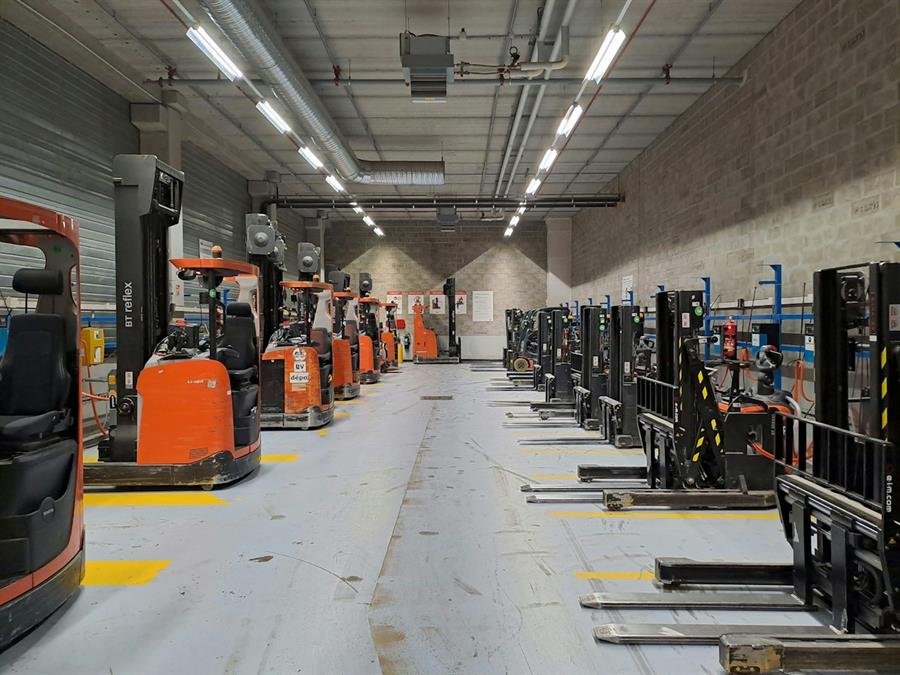
A 2 ton electric forklift may fit indoor pallet routes while a diesel unit handles a suitable outdoor area; allocation should follow real site conditions.
Improve One Constraint at a Time
Check whether better shift scheduling, route design, battery charging or preventive service can free capacity. If purchasing another truck, write requirements from observed work: peak pallets, rack height, aisle and daily hours. That avoids duplicating a poorly matched machine.
Train operators for any reassigned truck type and update the traffic map when fleet volume changes. Small fleets benefit from clear ownership more than complex software: one consistent process for defects, service and assignment can prevent many avoidable delays.
Create a Monthly Decision Dashboard
A small fleet does not need complex software to improve decisions. Record each truck's serial number, approved configuration, hour-meter reading, inspections, downtime, maintenance cost and main route. Add the work completed when it can be measured—pallet movements or hours on the dock—so a truck with low hours but essential peak duty is not mistakenly treated as redundant.
Review the record monthly for bottlenecks. If two trucks wait for one charger, the problem may be infrastructure rather than vehicle count. If one truck repeatedly needs tire repairs, examine its route. If a machine is idle except during a seasonal peak, compare the cost of ownership with a rental or shared capacity before selling it.
Use the data to set priorities for training, parts stock and replacement. Do not turn one month's unusually high repair cost into an automatic purchase decision; check the history and future workload. A reliable fleet plan explains which constraint is being removed and how success will be measured after the change.
Frequently Asked Questions
Does low utilization mean a truck should be sold?
Not necessarily. It may be critical backup capacity; examine peak demand.
When should a small warehouse add a forklift?
When measured workload and bottlenecks justify it after route and schedule improvements.
Discuss Your Forklift Requirements
Send your load weight, lift height, aisle width, duty hours and destination to Qisheng. Request a configuration and quote.