Forklift Load Center Explained
News
Quick Answer
Forklift load center is the horizontal distance from the fork face to the load's center of gravity; a farther center can reduce the truck's usable capacity.
Why the Distance Changes Capacity
Consider two pallets with the same mass. If one is deeper in the fork direction, its center of gravity may sit farther from the truck. That creates more forward tipping moment. A data plate states capacity under defined conditions, including load center, mast and attachment. The nominal “3 ton” name is not approval for every 3 ton load.
Loads can also be irregular or have an off-center mass. Ask the shipper for dimensions and a reliable weight; guessing from the package exterior can be misleading.
Check the Actual Load
Measure the load depth in the fork direction and identify whether the center of gravity is centered. If the mass is not uniformly distributed, the geometric midpoint may not be the true center. Long machinery, bundled pipes and liquid containers need particular attention. Consult the manufacturer or qualified supplier for approved capacity information instead of applying a rough online multiplier.
| Load characteristic | Capacity concern |
|---|---|
| Longer pallet depth | Center may move farther forward |
| Uneven mass | Actual center differs from midpoint |
| Attachment | Adds weight and changes geometry |
| High lift | May reduce allowable load |
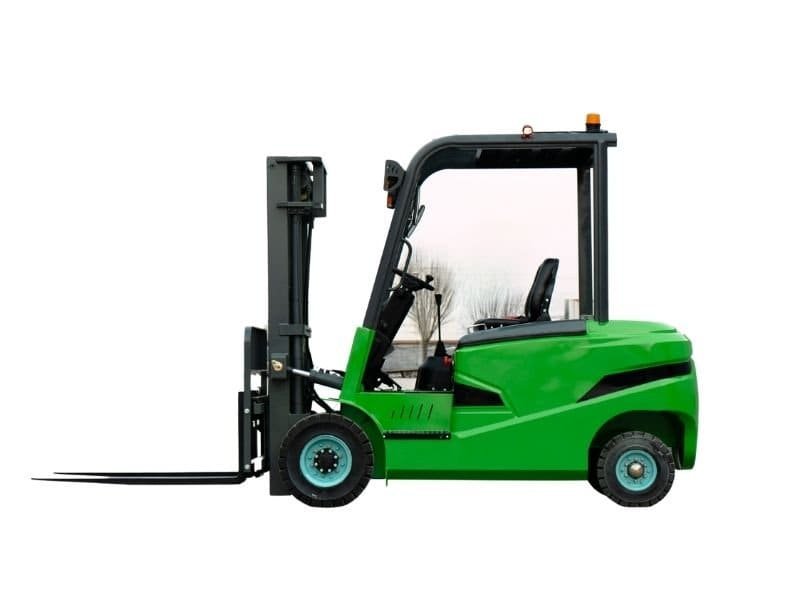
The 3 ton diesel forklift is a product reference; its applicable capacity depends on the delivered configuration and data plate.
Put the Number into Purchasing
Supply load weight, dimensions, center-of-gravity information and target lift height with the inquiry. Request a capacity chart for the specified mast and forks. If a clamp or side shifter will be installed, obtain approved data for that setup. Verify the plate on the delivered truck matches the final order.
Operators should use the approved rating rather than trying to “feel” whether the rear wheels are becoming light. Stability margin can disappear before the problem is obvious. The site must also consider turns, slopes and floor condition during movement.
Compare a Compact and a Long Load
Imagine two pallets with the same total weight. One is compact and evenly stacked; the other carries a long machine part extending well forward of the fork face. Their centers of gravity may sit at different distances from the truck. The same mass can therefore impose a different overturning moment. A rating printed for one load center does not automatically apply to the other.
Ask the shipper for the load's dimensions and center-of-gravity information where available. Confirm that the forks support the load as intended and that any attachment is approved for the truck. If the geometry is uncertain, do not turn a generic “rated tons times load center” shortcut into a new capacity plate. Refer the case to the manufacturer or a qualified equipment supplier.
For procurement, include the longest regular load in the specification, not only the heaviest. A buyer who supplies weight and footprint together gets a more useful recommendation than one who sends only tonnage. Record the required lift height too, because capacity can differ at high placement or with a different mast.
Frequently Asked Questions
Is load center the same as fork length?
No. Fork length is a component dimension; load center describes where the load's mass acts relative to the fork face.
Can I calculate a new rating myself?
Do not substitute a simplified calculation for manufacturer-approved capacity data for the actual configuration.
Discuss Your Forklift Requirements
Send your load weight, lift height, aisle width, duty hours and destination to Qisheng. Request a configuration and quote.