Forklift Repair vs Replace: A Cost Decision
News
Quick Answer
Forklift repair decisions should compare safe serviceability, future downtime and total cost against a replacement that actually fits the site.
Establish the Truck's Current Condition
Collect maintenance history, operating hours, recurring failures and a qualified repair estimate. Distinguish normal wear from structural, mast or braking problems. A machine with a serious unsafe condition should remain out of service while the decision is made.
Check parts availability for the exact model and serial number. A low labor estimate means little if a critical component has an uncertain delivery time.
Compare Two Forward Paths
Estimate repair cost, expected additional service life, planned maintenance and downtime. For replacement, include purchase, freight, commissioning, training, charger or fuel changes and disposal or resale of the old machine. Use the same forecast horizon and working hours.
| Cost element | Repair path | Replace path |
|---|---|---|
| Up-front cash | Parts and labor | Equipment and delivery |
| Downtime | Diagnosis and repair time | Procurement and setup |
| Future risk | Condition-dependent | Warranty-dependent |
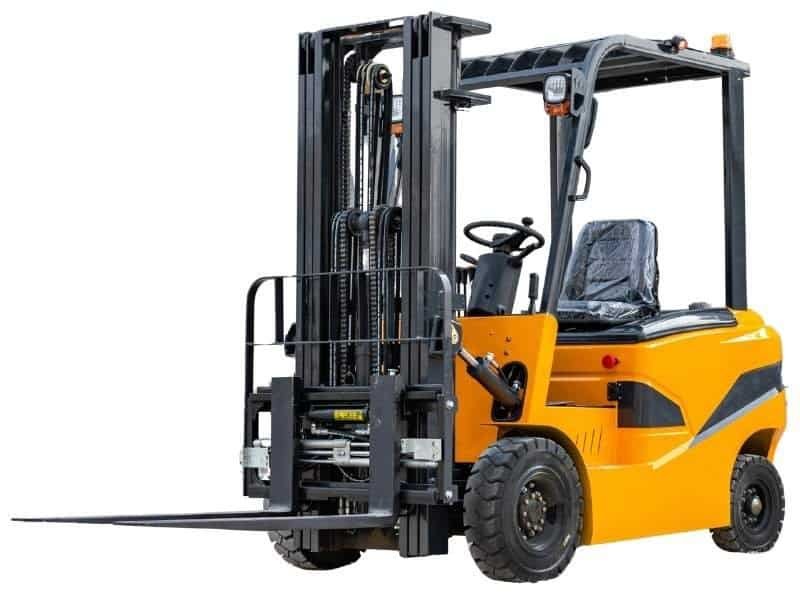
Do not assume a newer truck automatically fits existing rack and doorway dimensions. A 2 ton diesel forklift offered as a replacement still needs a full application check.
Make the Decision Visible
Write down the major assumptions, including expected annual hours and cost of a lost loading shift. If the repair is safety-critical, require competent approval and testing before return to service. If replacing, preserve useful information from the old truck: aisle performance, pallet sizes and common parts usage.
Some components can be rebuilt economically while others change the entire risk profile. A fleet manager should avoid a simple rule such as “replace after a certain age” without examining condition and workload.
Compare Future Cost, Not Money Already Spent
Historical repair bills are useful evidence of reliability, but they cannot be recovered by keeping the truck. Build a forward-looking comparison for the next intended ownership period. On one side, estimate the current repair, likely further work, downtime and residual value; on the other, estimate the replacement price, delivery, operator transition and operating cost.
Check whether the repaired truck would still fit the work. If the warehouse added higher racks or heavier loads, a successful engine repair will not solve a capacity or aisle mismatch. Conversely, replacing a suitable machine because of one isolated, well-defined repair may waste capital. Ask a qualified technician to assess structural, braking, mast and control-system concerns before using cost arithmetic as the only criterion.
Make the decision explicit in a short record: safety status, work requirements, repair scope, lead times and the cost of being without a truck. A temporary rental or shared machine may have value while waiting for either repair or delivery. Never keep an unsafe truck in use merely because the new quote has not arrived.
Frequently Asked Questions
Is a repair worthwhile if it costs less than a new truck?
Possibly, but future failures and downtime may change the comparison.
Can an unsafe truck be used while waiting for a quote?
No. Follow the out-of-service and repair process required by the workplace.
Discuss Your Forklift Requirements
Send your load weight, lift height, aisle width, duty hours and destination to Qisheng. Request a configuration and quote.