Forklift Safety Rules for Busy Sites
News
Quick Answer
Forklift safety relies on trained operators, fit-for-task trucks, inspected equipment and protected traffic routes; no single rule substitutes for a workplace program.
Set the Site Rules Before Travel
Assign authorized operators to the specific truck types they use. Mark pedestrian crossings, one-way lanes and restricted areas. Establish controls for docks, trailers, blind corners and ramps. Make sure workers know how to report a near-miss and a defective truck without pressure to keep using it.
The operator should know the truck's data plate and load limits. Buying a machine with a higher nominal capacity does not remove the need to assess load center and lift height.
Inspect and Communicate
Use a pre-operation check based on the truck manual and site hazards. A fault in brakes, steering, forks, tires or warning devices calls for proper reporting. Use horn and other warnings as site rules require, but do not assume a warning replaces clear sightlines or pedestrian separation.
| Control layer | Example |
|---|---|
| Equipment | Suitable truck and readable capacity plate |
| People | Trained, evaluated operators |
| Route | Controlled crossings and dock edges |
| Response | Defect reporting and out-of-service process |
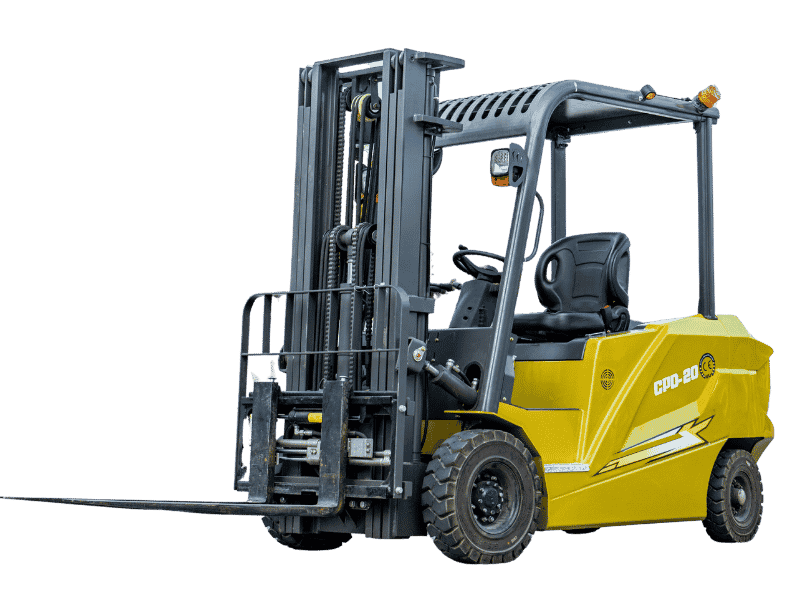
The 2 ton electric forklift is a sales example, not an operating instruction. Its specific manual must guide inspection and use.
Use Authoritative Local Requirements
U.S. employers can refer to OSHA 29 CFR 1910.178 for powered industrial truck rules. Other markets have their own regulatory framework. A site safety lead should adapt controls to workers, layout, loads and equipment rather than copying a generic checklist unchanged.
Review changes whenever a new attachment, rack, shift pattern or traffic route is introduced. A safety program is a maintained operating system, not a poster on the wall.
Turn Rules into a Site Walkthrough
Start the safety review where a new driver would start a shift. Can they identify the truck's data plate and manual, inspection point, approved route, pedestrian crossings and parking place? If not, the site's rules may be written but not usable. Walk the route with a supervisor and record the hazards that are specific to the building.
Separate physical controls from reminders. A marked crossing helps, but barriers, traffic direction, sight lines and speed management may be needed where people and trucks repeatedly meet. At loading docks, identify the condition of the trailer, dock equipment and edge protection before work. Safety signs cannot make an unsuitable truck or damaged dock plate safe.
Training and inspection must remain current when a truck type, attachment or route changes. For U.S. operations, consult OSHA 29 CFR 1910.178; the buyer's country may impose different obligations. A sales article can help a purchaser ask better questions, but it is not a substitute for the employer's safety program or the manufacturer's instructions.
Frequently Asked Questions
Is a forklift license enough at a new site?
Requirements vary, but site-specific training and evaluation may still be necessary for the truck and hazards involved.
Can a damaged truck finish one more shift?
An unsafe truck should be removed from service under the applicable procedure, not kept running for convenience.
Discuss Your Forklift Requirements
Send your load weight, lift height, aisle width, duty hours and destination to Qisheng. Request a configuration and quote.