Forklift Stability: What Changes the Risk?
News
Quick Answer
Forklift stability depends on the truck, load center, lift height, travel behavior and ground; a rated capacity is valid only under its specified conditions.
Static Balance Is Only the Beginning
A counterbalance truck supports a front load through its chassis and rear weight. The load's center of gravity, mast position and attachment affect the balance. A load placed farther forward can create a greater tipping moment even if its mass is unchanged. An unreadable data plate removes a key reference for deciding whether a load is within the approved envelope.
Moving adds forces. Abrupt turns, braking, uneven ground and slopes may change how the truck behaves. Operators must use training, manual instructions and site limits, not a single online diagram.
Recognize High-Risk Changes
An attachment may add weight and move the carried load away from the fork face. A taller lift may reduce usable capacity. A long, poorly secured package may shift during travel. The surface may be firm when dry but hazardous when wet. These changes should trigger an application review.
| Change | Stability question |
|---|---|
| Longer load | Has the load center moved forward? |
| Higher rack | What is capacity at that height? |
| New attachment | Is the data plate updated? |
| Ramp or rough floor | Is this truck approved for the route? |
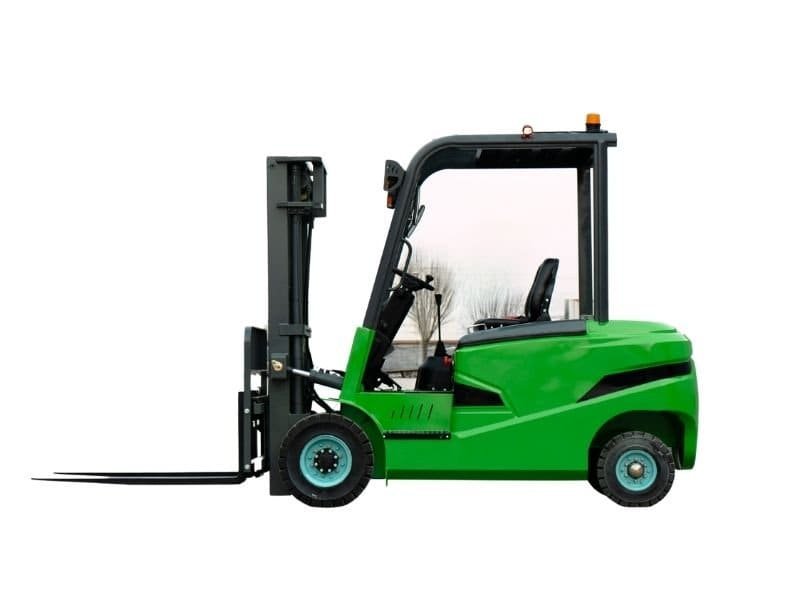
For a 3 ton diesel forklift, check the delivered mast and plate. A catalogue rating cannot describe every later modification.
Control the Worksite
Keep pedestrian zones and travel routes clear. Inspect the truck before use, especially tires and mast components. Train operators on the exact truck, load types, ramps and dock conditions. Supervisors should investigate near-misses and change the route or procedure when a recurring risk appears.
OSHA's powered industrial truck standard provides requirements for U.S. workplaces. It does not make a web article a substitute for hands-on training or manufacturer-approved capacity guidance.
Review Stability Along the Whole Route
Static load balance on level ground is only one part of a working lift. Turning, braking, crossing a ramp and raising a load can change how a forklift behaves. A route survey should flag slopes, dock plates, potholes, floor edges and corners where an operator might turn while carrying a load. Those conditions belong in the equipment and training decision.
Consider a machine that can lift a pallet safely from the floor but must then turn sharply to enter a rack aisle. A demonstration of lifting alone would miss the route risk. Ask for the manufacturer's operating guidance for grades and load travel, and design a route that does not require unsafe maneuvers. Do not use extra counterweight or an improvised attachment to compensate for poor fit.
The truck's approved data plate, suitable surface and trained operator work together. If a load is unusually long or its center of gravity is not known, pause and verify the case before movement. OSHA's truck fundamentals describe why design and application matter; local rules and the individual manual remain essential.
Frequently Asked Questions
Does a heavier counterweight permit any load?
No. Capacity is a rated property of the complete approved machine configuration.
Is an empty forklift stable in every turn?
No. Speed, surface and steering can create risk even without a carried pallet.
Discuss Your Forklift Requirements
Send your load weight, lift height, aisle width, duty hours and destination to Qisheng. Request a configuration and quote.