Forklift Troubleshooting: Symptoms and Next Steps
News
Quick Answer
Forklift troubleshooting starts by recording the symptom and isolating unsafe equipment; qualified personnel should diagnose and repair faults using the correct manual.
Start with a Clear Symptom Report
Note when the problem occurs, the displayed warning, operating hours, load condition and environmental factors. “Truck does not work” is less useful than “lift stops after several minutes under load and a code appears.” The operator should not repeatedly reset a safety-related fault to finish a shift.
If brakes, steering, forks, mast or battery show a potentially unsafe condition, take the truck out of service under site procedure. Troubleshooting information is not permission for unqualified repair.
Group Faults by System
Travel, lifting, starting and charging symptoms point to different systems. A battery problem can look like a travel problem; a hydraulic leak can reduce lift performance. Use the model-specific fault code description rather than applying another manufacturer's code list.
| Symptom | First information to record |
|---|---|
| No travel | Display message and power status |
| Slow lift | Load, height and hydraulic observations |
| Brake concern | Conditions when it occurs |
| Short runtime | Charge record and shift workload |
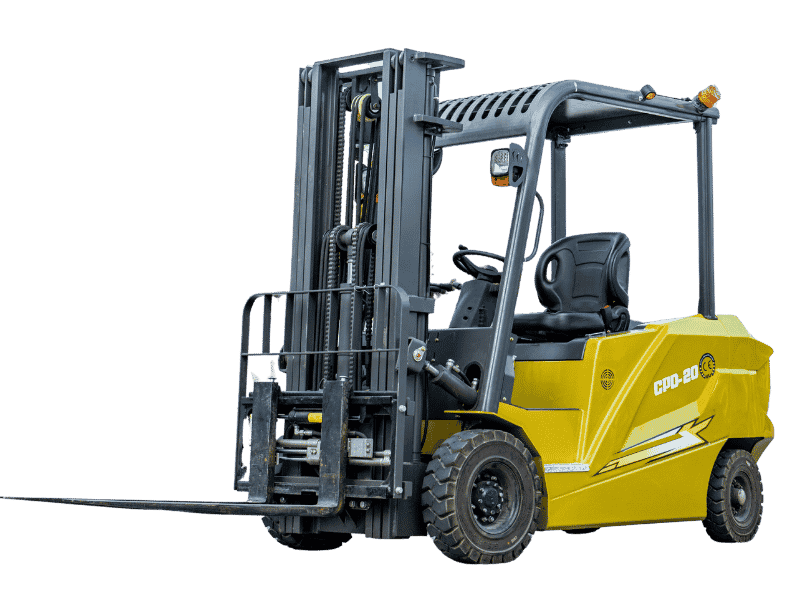
The 2 ton electric forklift shown here requires its own electrical manual. A diesel machine will have a different diagnostic path.
Resolve and Learn
A technician should confirm the root cause, parts used and post-repair test. Log repeat faults by machine and operating hours. If the same issue returns, investigate application, maintenance interval or operator procedure rather than repeatedly replacing one component.
For U.S. workplaces, OSHA 29 CFR 1910.178 addresses removing unsafe powered industrial trucks from service. Keep manuals and serial-number details accessible so a service provider can identify the correct part.
Produce a Fault Report a Technician Can Use
“Forklift not working” is too vague to guide a repair. Record the truck and serial number, hour meter, exact warning or symptom, task being performed, whether the issue happens only with a load and any recent service. Note the time and environment without repeatedly operating an unsafe machine to reproduce the problem.
A technician can then separate likely systems: travel, lift, brake, steering, power supply or control. The operator should not bypass an interlock or erase a fault code to keep the shift running. If the symptom affects safe operation, remove the truck from service under the workplace procedure and follow the manufacturer's diagnostic path. Online fault-code lists may describe a different control unit or model revision.
After repair, document the actual cause, part numbers, test performed and return-to-service decision. If the same issue recurs across multiple trucks, examine the route, charging process or maintenance schedule. A good troubleshooting record prevents an isolated repair from hiding a broader site problem.
Frequently Asked Questions
Should I keep operating if a warning clears after restart?
Not automatically. Follow the manual and site fault procedure; a recurring or safety-related warning needs assessment.
Can a web fault-code list replace the manual?
No. Codes and meanings vary by model and controller version.
Discuss Your Forklift Requirements
Send your load weight, lift height, aisle width, duty hours and destination to Qisheng. Request a configuration and quote.