Forklift vs Reach Truck: Warehouse Decisions
News
Quick Answer
Forklift vs reach truck comparisons focus on workflow: counterbalance forklifts suit many dock moves, while reach trucks target suitable high-rack, tighter-aisle storage.
Compare the Warehouse Tasks
A counterbalance forklift carries forks in front and can transfer pallets across open areas and loading docks when suitably specified. A reach truck extends toward the rack and may use aisle space more efficiently in a compatible warehouse. Support legs, floor requirements and pallet interface make it a specialized choice.
If your operation handles both unloading and high storage, one machine may not be optimal for both stages. Calculate whether a mixed fleet improves throughput enough to justify it.
Test the Rack and Route
Measure clear aisle, rack height, pallet depth and floor condition. A reach truck may fit the rack but be unsuitable for a yard or dock transition. A counterbalance truck may serve the dock well yet require wider storage aisles.
| Need | Counterbalance | Reach truck |
|---|---|---|
| Open dock route | Often suitable when specified | Check model limitations |
| Dense high racks | Larger aisle may be needed | Designed for suitable rack aisles |
| Uneven outdoor surface | Check truck/tire approval | Usually needs suitable floor |
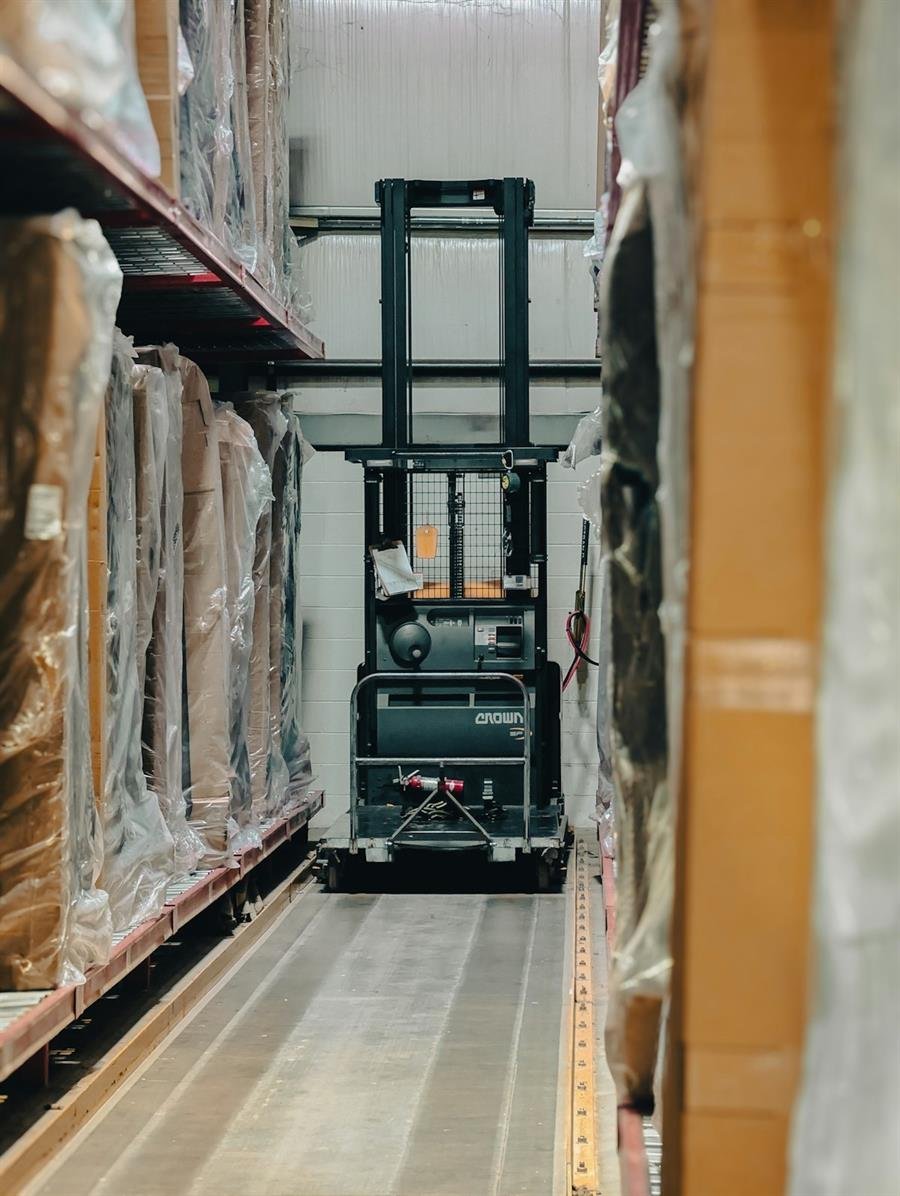
The 2 ton electric forklift pictured is a counterbalance comparison reference, not a reach-truck offering.
Compare Total Workflow Cost
Add rack density, travel distance, handling steps, battery or fuel needs and operator training. A narrower aisle can increase storage capacity but may require floor upgrades or different maintenance. Ask suppliers for drawings and capacity at the target height using your actual pallet.
Avoid selecting by equipment label alone. The decision should follow a site layout and throughput estimate, with the approved data plate checked for the final machine.
Split Dock Work from Rack Work
Draw the path of a pallet arriving at the dock and ending on the highest rack beam. A counterbalance forklift may be useful for trailer and open-floor movement, while a reach truck can be a better fit for a dense indoor rack layout. Neither label guarantees suitability for both stages. Check each proposed machine's approved capacity, dimensions and operating environment.
If one truck is meant to do the whole route, test the hardest part: a tight right-angle placement, outdoor crossing or trailer entry. If two types are considered, estimate the transfer point and the labor it adds. An extra movement may be worthwhile if it enables a safer aisle layout or more storage, but it should be included in the comparison.
Ask the supplier for model-specific aisle requirements with your pallet, highest-place capacity and mast clearance. For the counterbalance option, verify whether the wider aisle would remove rack positions. For the reach option, confirm the floor and dock tasks are appropriate. A layout model gives a better answer than a general claim that one type is “more versatile.”
Frequently Asked Questions
Can a reach truck unload every trailer?
No. Check the specific model's dock and floor suitability.
Can a counterbalance forklift use high racks?
Some can, if mast height, capacity and aisle clearance are adequate.
Discuss Your Forklift Requirements
Send your load weight, lift height, aisle width, duty hours and destination to Qisheng. Request a configuration and quote.