How Does a Forklift Work? Mast and Counterweight
News
Quick Answer
A forklift works by using a mast and hydraulic lift to raise a load while the chassis and counterweight support stability; the rated capacity depends on load position and configuration.
Lift Motion and Load Support
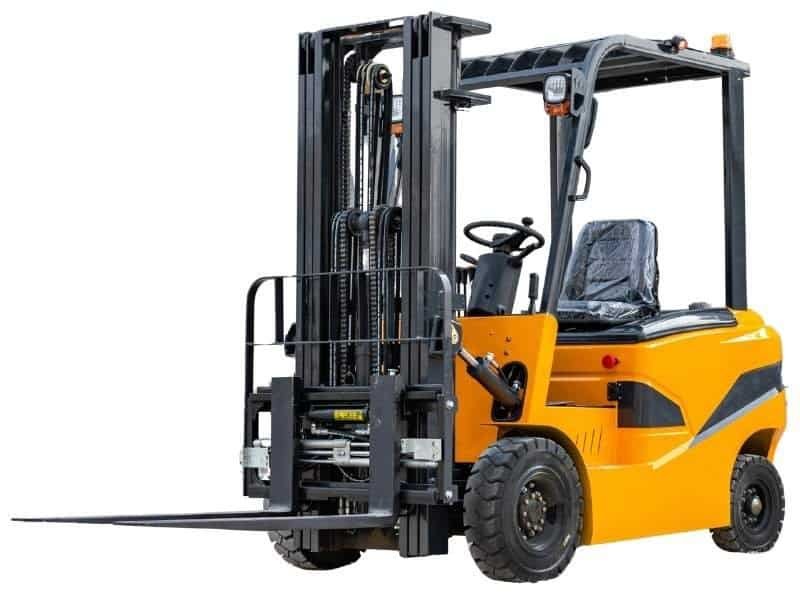
The forks connect to a carriage that travels on a mast. A hydraulic system raises the carriage, while tilt functions help position the mast for handling. The operator controls travel, steering and lifting from the designated station. On a counterbalance truck, the weight at the rear counters the moment created by a load ahead of the front axle.
This does not mean any load within a headline tonnage is safe. A long crate can place its center of gravity farther forward than a compact pallet of equal weight. The load center printed on the data plate matters, as do mast height, attachments and the manufacturer's configuration.
Why the Forklift Stays Balanced
Imagine a short, compact pallet and a long machine part, each weighing the same. The longer part can create a larger forward tipping moment. Elevating either load also changes how the truck responds to turns, slopes and braking. Operators should keep travel loads at the appropriate low position and follow their site training and truck instructions.
| Element | Practical role |
|---|---|
| Forks and carriage | Support the load at approved contact points |
| Mast and hydraulics | Raise and position the carriage |
| Counterweight and chassis | Contribute to balance within the rated envelope |
| Data plate | Defines the approved capacity and configuration |
An attachment such as a clamp adds weight and shifts geometry. Do not calculate a new safe rating from a generic formula; obtain the manufacturer's approved capacity information for that exact attachment.
Power and Site Fit
Electric and diesel trucks use different drive and energy systems, but the lift-and-balance principle is similar. A buyer choosing a 2 ton diesel forklift should compare fuel, ventilation and ground conditions, not only engine output. An electric alternative can reduce local exhaust but requires a charging plan and suitable duty cycle.
For a proposed truck, request the rated capacity, load center, maximum lift, mast height when lowered, tire specification and turning data. These values tell you much more about usable work than a product photo. The OSHA truck fundamentals explain why design and operating environment both affect safe use.
Trace One Lift Through the Machine
Consider a pallet placed on the floor. The forks must enter and support it without striking the goods; the carriage and mast then transmit the lifting force from the hydraulic system. As the load rises, its position relative to the front axle matters to stability. A load that is farther forward, higher, or unevenly distributed is not equivalent to a compact load of the same mass.
When comparing brochures, ask the supplier for the capacity plate or approved chart for the proposed mast, forks and attachment. A marketing photograph may show options that are absent from the quoted truck. The power source drives travel and the hydraulic system, but a larger engine or battery does not by itself change the approved capacity.
The way the truck turns is another practical difference from a car: the operator must understand the truck's steering geometry and rear-end swing in its actual workspace. A written route survey, equipment-specific training and a supervised demonstration are more reliable than a diagram alone. This explanation is for buyers; operating instructions must come from the truck manufacturer and the workplace's trained supervisor.
Frequently Asked Questions
Does a stronger engine increase lifting capacity?
Not automatically. The truck's approved data plate, hydraulic and structural design, load center and attachment configuration determine the rated load.
Why does a load center matter?
Moving the load's center farther from the fork face increases the forward moment and may reduce the load the truck can handle.
Discuss Your Forklift Requirements
Send your load weight, lift height, aisle width, duty hours and destination to Qisheng. Request a configuration and quote.