How to Charge a Forklift Battery Safely
News
Quick Answer
How to charge a forklift battery safely depends on its chemistry, matched charger and approved site procedure; trained staff should follow the exact equipment manuals.
Identify the Battery System
Confirm the installed battery's chemistry, voltage and model, then match it to its approved charger. A lead-acid procedure is not interchangeable with a lithium system's battery-management requirements. Improvised connectors or charger settings can damage equipment and create hazards. The purchase specification should list the battery and charger together.
An electric truck can have substantial stored energy even when it appears idle. Workers need site-specific instruction before connecting or servicing the system.
Prepare a Controlled Charging Area
Assess electrical supply, traffic, ventilation where required, fire precautions and clear access around the charger. Keep forklifts and pedestrians from interfering with charging operations. Check the manufacturer's instructions on shutdown, connector handling and personal protective measures. Damaged cables, connectors or abnormal battery conditions require reporting and qualified assessment.
| Planning item | Verification |
|---|---|
| Battery and charger | Approved chemistry, voltage and model |
| Space | Safe truck parking and cable routing |
| Electricity | Suitable supply and protection |
| People | Trained staff and emergency procedure |
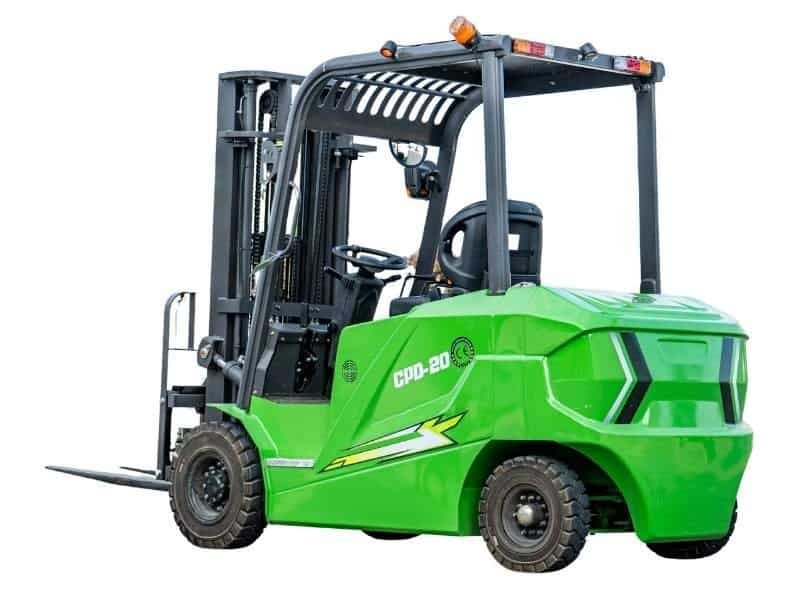
The 2 ton electric forklift is a vehicle reference; ask which battery and charger are included before adopting a charging schedule.
Fit Charging to the Shift
Estimate hours of travel and lifting, plus breaks between shifts. Charging frequency and opportunity charging should follow the battery maker's instructions. Keeping a record of charge events, faults and runtime helps reveal whether the pack is undersized or a component is deteriorating.
For U.S. workplaces, review OSHA's electrical power-source guidance and applicable rules. This article is a planning checklist; it intentionally does not replace the exact charger manual or workplace training.
Design the Charging Workflow
The charging plan should begin with the specific battery and charger, not an electrical socket that happens to be nearby. Confirm the truck model, battery chemistry, voltage, connector and charger settings with the manufacturer. A matching plug alone cannot establish compatibility. Keep the operator manual and charging instructions where the staff responsible for the process can use them.
Map when each truck returns, how long it can be unavailable and whether two machines need the same charger at once. In a busy warehouse, parking a truck for charging can block goods-in or a pedestrian route unless the location is planned. Include power capacity, access for inspection and any required ventilation or fire controls in the facility design.
The employer's safety procedure should cover inspection before charging, reporting damage, who may connect equipment and what to do with a fault. Battery types have different handling requirements; do not copy a watering or opportunity-charging rule from one chemistry to another. For U.S. sites, OSHA's powered industrial truck standard provides relevant workplace provisions, alongside the equipment maker's instructions.
Frequently Asked Questions
Can any charger with the same plug be used?
No. Compatibility requires approved chemistry, voltage, charging profile and connector arrangements.
Is charging always harmless indoors?
No. Assess the battery system, ventilation, electrical installation and site safety requirements.
Discuss Your Forklift Requirements
Send your load weight, lift height, aisle width, duty hours and destination to Qisheng. Request a configuration and quote.