How to Drive a Forklift: Controls and Steering
News
Quick Answer
How to drive a forklift depends on its steering, controls, load and site; only trained and authorized operators should use a specific truck after hands-on evaluation.
Understand the Controls First
Forklift controls are not standardized across every model. Travel direction, accelerator, brakes, parking brake, horn and hydraulic levers may be arranged differently. A rear-steered counterbalance truck also turns unlike a car, with rear-end swing that affects nearby racks and pedestrians. Read the operator manual and receive model-specific instruction before moving.
Never treat a product video as operator training. It cannot show the exact floor, traffic, slopes or load geometry in your workplace.
Driving Is a Route Decision
The operator should know where pedestrians cross, which aisles are one-way, how docks are controlled and whether visibility changes with a load. Speed must suit the surface and traffic. The travel position of the load, turning behavior and operation on grades follow the truck manual and site training.
| Area | Site-specific question |
|---|---|
| Blind corner | What warning and traffic control is in place? |
| Dock | Is trailer movement prevented and edge protected? |
| Ramp | Is the grade within the truck's approved limits? |
| Cross-aisle | Can pedestrians enter the turning envelope? |
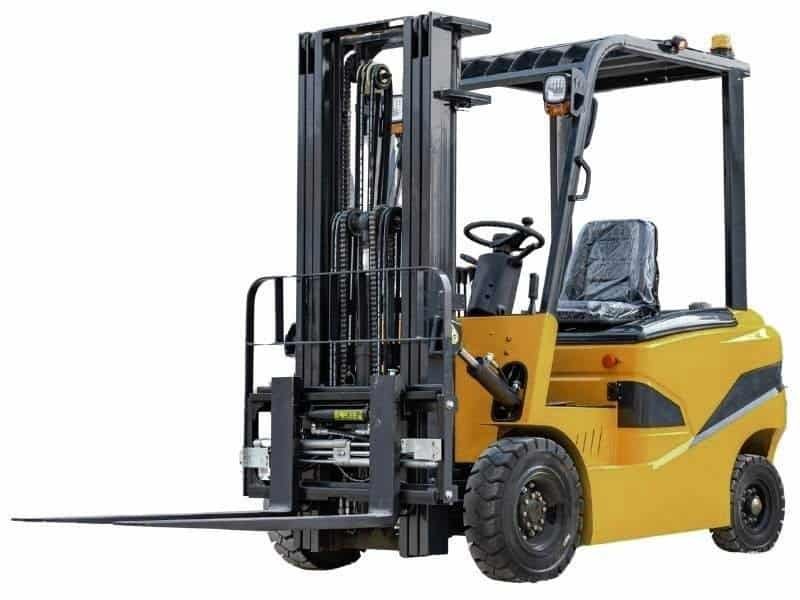
The 2 ton diesel forklift illustrates a counterbalance machine. Do not assume its control layout matches another model, even one of the same rated capacity.
What a Buyer Should Ask For
Request the operator manual, data plate, warnings in the required language and maintenance schedule for the exact model. Ask about visibility aids, horn, lights, restraint arrangements and any site-relevant optional equipment. Plan an acceptance check with trained staff when the machine arrives.
For U.S. workplaces, OSHA's powered industrial truck standard describes training and operational requirements. Training must address both the truck and workplace. A vendor's delivery explanation is helpful, but the employer remains responsible for safe site implementation.
Plan an Actual Driving Route
Before discussing controls, define the route: where the truck starts, where it picks up a load, every pedestrian crossing, the tightest turn and the parking position. A different truck type may steer or swing differently, so a driver trained on one machine must not assume that the new truck behaves the same. Consult its operator manual and site-specific training.
Visibility is part of the route design. A high or wide load can block the forward view; the approved travel method and any use of a spotter must follow workplace procedures. The answer is not simply to drive faster through a blind crossing. Keep people separated from equipment where possible and mark places where communication is required.
An importer should ask the supplier for the operator manual in a usable language, the control layout, braking and parking instructions, and the approved data plate before handover. A hands-on evaluation at the destination site is still necessary. In the United States, OSHA explains the training and evaluation requirements; an article can inform the purchase, but it cannot authorize operation.
Frequently Asked Questions
Is a forklift driven like a car?
No. Steering, load position and stability differ; operators need equipment-specific training.
Can I drive an unloaded truck without training?
No. The truck can still strike people or objects and remains subject to workplace rules.
Discuss Your Forklift Requirements
Send your load weight, lift height, aisle width, duty hours and destination to Qisheng. Request a configuration and quote.