How to Operate a Forklift Safely
News
Quick Answer
How to operate a forklift safely begins with formal training, authorization and a pre-use inspection; this overview is not a substitute for the manufacturer's manual or hands-on evaluation.
Before the Shift
Only trained and authorized people should operate a powered industrial truck. Review the assigned machine's manual, data plate and site traffic plan. A pre-use check should cover visible damage, forks, tires, leaks, controls, horn, brakes and the power system as applicable. Report a defect and remove an unsafe truck from service according to site procedure.
Before lifting, compare the load with the truck's approved capacity at its load center and configuration. Verify that the pallet or load interface is sound and that the travel route is clear.
During Load Movement
Approach and handle loads according to training and the manufacturer's instructions. Keep a clear view in the direction of travel and use the site's procedure when a load blocks it. Control speed for surface, turns and people nearby. A raised load changes stability; avoid driving or turning in ways that exceed the truck's instructions.
| Stage | Essential decision |
|---|---|
| Pre-use | Is the truck safe and authorized for this operator? |
| Pick-up | Is this load within the data-plate limits? |
| Travel | Is the route clear and suitable? |
| Parking | Is the truck secured under site rules? |
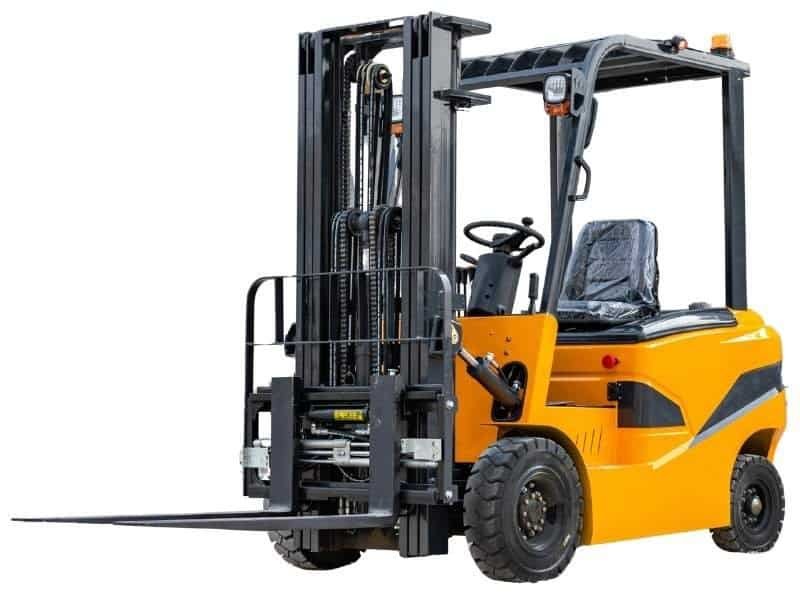
The 2 ton diesel forklift is a product example only. Procedures must be adapted to the exact truck, attachments and workplace.
Training and Site Controls
In the United States, OSHA regulation 29 CFR 1910.178 covers operator training and powered industrial truck use. Other countries have their own requirements. Employers should combine truck-specific instruction, supervised practice, evaluation and site hazards such as docks, slopes and pedestrian crossings.
Written instructions help, but they cannot teach the feel of steering, braking or load handling on their own. This page should help buyers ask about safety features and training materials; it should not be used as a step-by-step authorization to drive.
Use This Article as a Supervisor's Planning Aid
Safe operation starts before a load is lifted: the employer selects suitable equipment, maintains it and trains and evaluates operators for the particular truck and workplace. This page cannot certify an operator or replace the manufacturer's manual. For U.S. workplaces, OSHA's powered industrial truck standard sets out training, inspection and operating provisions; other countries have their own requirements.
A supervisor can make the task more predictable by identifying the approved routes, load limits, pedestrian crossings, parking locations and procedures for blocked visibility. Show operators the unusual hazards at this site: a blind dock corner, a slope, an overhead obstruction or an area where a truck and people share the floor. A general driving demonstration does not address those local conditions.
When a defect, unstable load or unexpected obstruction appears, the correct response is to stop the unsafe operation and follow the site procedure, not improvise from an online checklist. Record the incident or defect so maintenance and training can be improved. Treat this guide as a set of questions to ask in a formal training program, not as instructions for an untrained person to drive.
Frequently Asked Questions
Can someone learn to drive from an online article?
No. Practical training, evaluation and authorization are required under applicable workplace rules.
What if a defect appears during use?
Stop and follow the site's reporting and out-of-service procedure; do not improvise a repair while operating.
Discuss Your Forklift Requirements
Send your load weight, lift height, aisle width, duty hours and destination to Qisheng. Request a configuration and quote.