Lithium vs Lead-Acid Forklift Battery
News
Quick Answer
Lithium vs lead acid forklift battery decisions depend on compatible truck design, shift pattern, charging practice, service support and total cost rather than chemistry alone.
Compare Operating Patterns
Lead-acid batteries have established service practices but may require dedicated maintenance and charging arrangements. Lithium systems can support different charging strategies when approved by the battery and truck makers. Actual advantages depend on the specific pack, charger and work schedule, not just the word “lithium” on a quotation.
For a single predictable shift, initial cost may weigh heavily. For multiple shifts with short breaks, charge opportunity and downtime may become more important. Build the comparison using your site's actual hours.
Confirm Compatibility and Safety
Battery voltage, dimensions, weight, communication and charger must suit the truck. A battery also contributes to the vehicle's balance; changing its weight can affect the approved configuration. Never treat two packs with similar plugs as directly interchangeable.
| Comparison item | Question to ask |
|---|---|
| Truck approval | Is this pack approved for this exact model? |
| Charge window | Can the site follow the required schedule? |
| Maintenance | What tasks and training are needed? |
| Support | Who handles faults and replacement locally? |
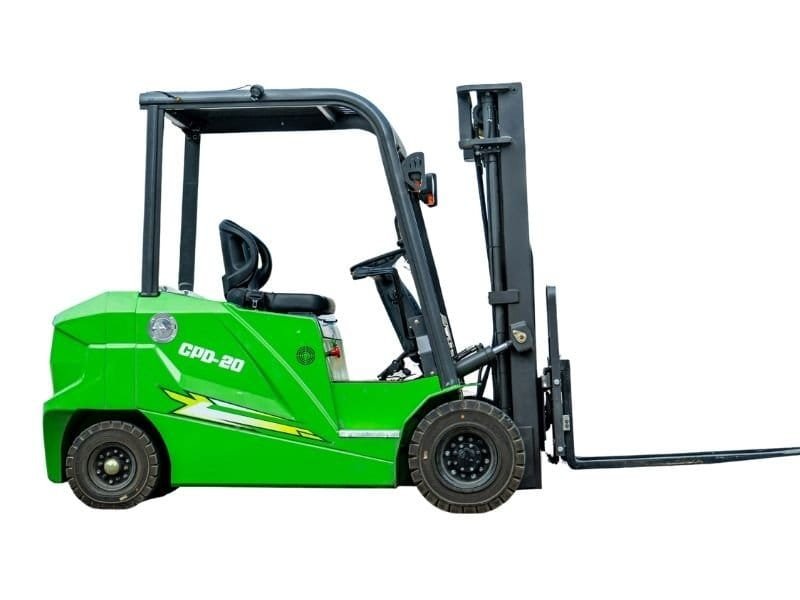
The 2 ton electric forklift is an example vehicle, not a declaration that both battery options are available. Request the current approved option sheet.
Calculate Real Ownership Cost
Include battery, charger, electrical work, maintenance labor, expected downtime and future replacement. Compare on a common number of working hours. Ask for warranty conditions and whether charge cycles or operating environment affect coverage.
Environmental and end-of-life handling also need a plan under local rules. A seller should explain the return or recycling pathway for the supplied system. Choose only after the technical match is documented; a generic online comparison cannot validate a retrofit.
Run the Comparison with Your Shift Data
Take a representative week of operating hours and record when each truck is active, idle and available to charge. A single-shift fleet with long breaks can have a different economic answer from a multi-shift operation with short pauses. Ask each supplier to specify the charger, charging behavior and usable energy assumed for its proposed system.
Do not treat lithium and lead-acid as drop-in alternatives. The truck's battery compartment, electrical control, mass, connector and charger may be designed around a particular system. A conversion needs manufacturer approval, and any changed configuration must retain appropriate capacity and safety information. The battery-management system and service route should be part of a lithium quotation, not hidden behind a chemistry label.
Compare initial equipment and infrastructure, routine service, energy use, expected replacement and downtime over the same ownership period. Add the cost of training staff in the approved charging procedure. The result is a site-specific business case; neither chemistry is automatically cheaper or better for every forklift application.
Frequently Asked Questions
Is lithium always better for every fleet?
No. Site duty, infrastructure, capital and support can change the result.
Can I replace lead-acid with lithium myself?
Do not assume so. Obtain truck-manufacturer approval and a matched installation plan.
Discuss Your Forklift Requirements
Send your load weight, lift height, aisle width, duty hours and destination to Qisheng. Request a configuration and quote.