Reach Forklift Guide: Lift Height and Aisle Fit
News
Quick Answer
A reach forklift uses a reach mechanism to place pallets in racks within suitable warehouse aisles; review height, load center, floor and pallet compatibility.
How Reach Equipment Differs
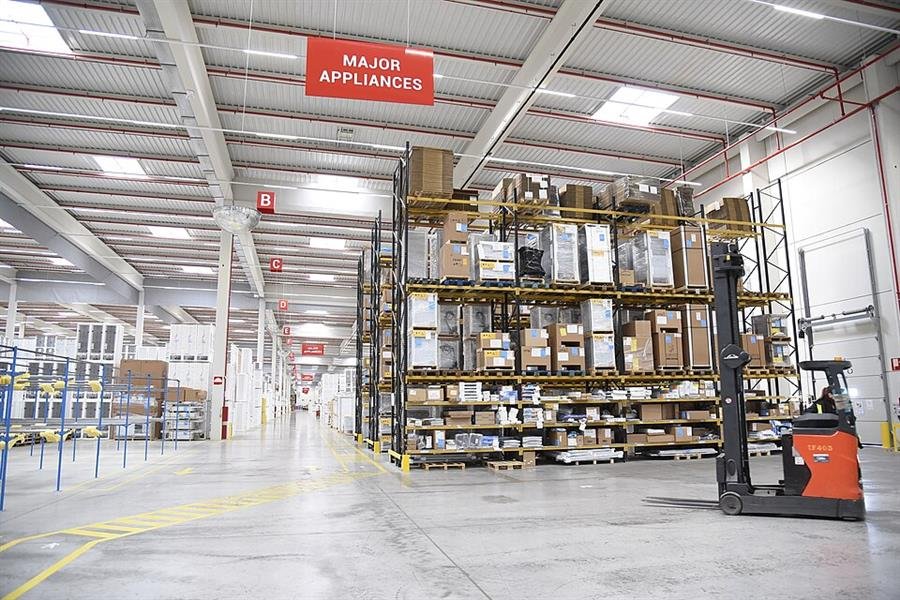
A reach truck is intended for storage access in tighter warehouse spaces than many counterbalance forklifts. Its mast or fork assembly reaches toward the rack while the truck remains in the aisle. Support legs and wheel placement are part of the design. This geometry can limit interaction with some pallets or dock surfaces, so confirm the full task list.
“Reach forklift” is not a guarantee of tall-lift capacity. A truck's approved load may decrease with higher lift or different pallet positioning. Request a capacity chart for the exact mast and battery configuration.
Fit the Rack System
Survey clear aisle width, rack beam levels, pallet entry direction and floor flatness. Check the top level with real load dimensions, not just fork height. Ensure the truck can enter and leave the aisle, turn at the cross-aisle and access charging or maintenance areas.
| Rack input | Why it matters |
|---|---|
| Top beam height | Required lift and residual capacity |
| Pallet opening | Fork and support-leg compatibility |
| Clear aisle | Maneuvering allowance |
| Floor flatness | Stability and operator control |
The image of a 2 ton electric forklift is a counterbalance comparison reference; it should not be mistaken for a reach-truck product offer.
Compare with Counterbalance
A reach truck may increase rack density in a suitable building. Counterbalance equipment can be more flexible for dock transfer and open handling. Some warehouses use both: one for unloading and another for high rack replenishment. Calculate the movements and costs for each workflow rather than looking only at purchase price.
Ask the supplier for mast drawings, capacity data at height and the required training topics. The final quotation should list charger, forks and any rack-guidance options. If pallets vary in size, include the largest regular unit and an irregular-load example in the review.
Check Pallet Placement at Height
A reach truck may fit a tight indoor rack aisle, but its nominal maximum lift is not the same as useful capacity at the top beam. Provide the supplier with the heaviest pallet intended for each high level, its depth and the exact beam height. Ask for the approved capacity at that position with the proposed mast, battery and forks.
The warehouse floor and pallet quality matter as much as the truck's geometry. A damaged pallet may not be suitable for precise high-level placement; floor irregularities can complicate an already tight approach. Survey column guards, sprinkler clearances and the cross-aisle used to enter the rack run. The lowest route opening must also accommodate the mast when lowered.
If the same machine will unload trailers or cross an outdoor yard, verify that those tasks are within the model's intended use before placing an order. Some facilities separate dock work from high-rack work because the optimal equipment differs. Compare the cost and speed of the whole workflow, not just the storage density a reach truck can make possible.
Frequently Asked Questions
Can a reach truck work in any aisle?
No. Aisle width, rack, pallet dimensions and floor conditions must match the specific design.
Is reach height the same as rated capacity?
No. Check the allowable load at your actual height and load center.
Discuss Your Forklift Requirements
Send your load weight, lift height, aisle width, duty hours and destination to Qisheng. Request a configuration and quote.