Three-Wheel vs Four-Wheel Electric Forklift
News
Quick Answer
A 3 wheel electric forklift can offer a compact turning pattern, while a 4 wheel design may suit different stability and surface needs; compare exact models and loads.
Compare Geometry, Not Wheel Count Alone
Three-wheel electric trucks are often considered for restricted indoor spaces. Four-wheel trucks come in many sizes and configurations. However, wheel count does not by itself specify turning radius, rated capacity at height, tire design or floor suitability. Ask for the manufacturer's aisle calculation using your pallet dimensions.
Steering arrangement also affects how the rear of the truck swings during a turn. Operators need clear pedestrian separation even when the nominal turning circle looks small on paper.
Consider Loads and Surfaces
Record the maximum pallet weight, height and length. A longer load can alter capacity and aisle demands. Smooth, level floors may suit one design, while thresholds, ramps or uneven surfaces deserve a separate suitability review. Do not infer that four wheels automatically make a truck safe on poor ground.
| Comparison point | What to verify |
|---|---|
| Turning | Aisle calculation with your pallet |
| Stacking | Residual capacity at rack height |
| Surface | Tire choice and approved gradients |
| Energy | Battery, charger and duty cycle |
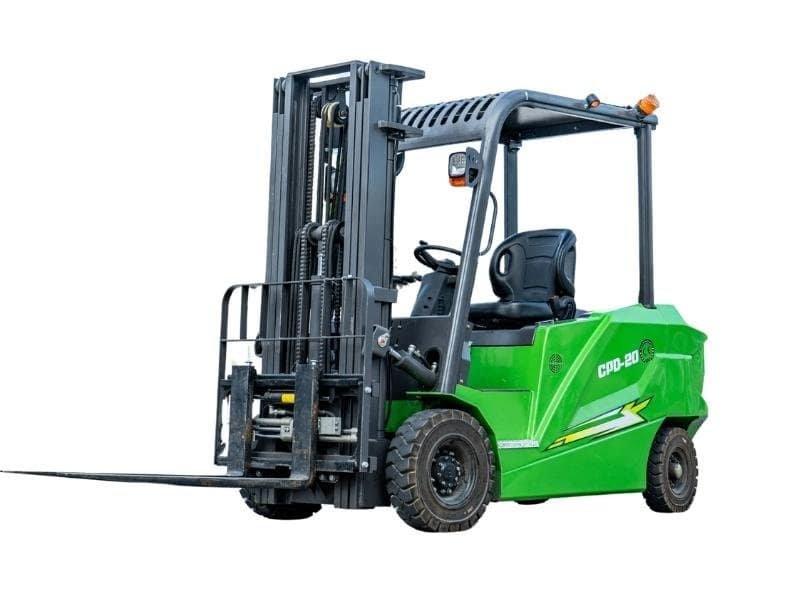
The photographed 2 ton electric forklift is a counterbalance product reference; this article does not claim that Qisheng currently lists a three-wheel version. Request current availability before treating any image as a configuration promise.
Run a Realistic Trial
Mark a trial aisle at the measured clear width, using the longest regular pallet and a trained operator. Check reverse visibility, fork entry, turn recovery and access to charging. Compare purchase quotations only after mast, forks, battery and warranty are specified consistently.
Floor loading and dock crossings still matter. The narrowest truck is not automatically the most productive if it carries less at the necessary height or requires more charge interruptions. The best choice is the one that completes the full route predictably and within its data-plate limits.
Compare the Same Pallet on the Same Route
Take the heaviest routine pallet and trace its path from pickup to the highest rack. A three-wheel design may offer a tighter maneuver in some model ranges, but the manufacturer must supply the actual aisle and capacity figures. Four-wheel models can vary substantially too. Wheel count alone is not a reliable substitute for a site trial.
During the trial, record the turn at the aisle end, the approach to the rack and the operator's view while reversing. Repeat with the real pallet length because overhang changes the space occupied by the combination. Test the floor transitions at the dock or yard if the truck will encounter them; stability and ride should be judged for the exact tire and chassis combination.
Ask both suppliers for capacity at the same load center and top placement height, plus the same battery, charger and mast options. This avoids attributing a difference caused by configuration to wheel count. If the tighter machine allows another rack row, calculate that storage benefit separately from purchase price; if it does not, choose on total fit and support.
Frequently Asked Questions
Does three-wheel mean lower capacity?
Not as a universal rule. Compare approved ratings for the specific models and configurations.
Is four-wheel always safer outdoors?
No. Surface suitability depends on the complete truck and tire specification, not wheel count alone.
Discuss Your Forklift Requirements
Send your load weight, lift height, aisle width, duty hours and destination to Qisheng. Request a configuration and quote.