2.5 Ton vs 3 Ton Forklift: Selection Guide
News
Quick Answer
A 2.5 ton vs 3 ton forklift choice should be based on actual load center, height and route; the extra nominal rating is useful only if the larger truck still fits.
Compare the Loads Honestly
List normal and heaviest pallets, including packaging and attachments. A 2.5 ton truck may handle a compact load within its approved rating but not a longer load at the same mass. A 3 ton model may offer more margin in one configuration, yet its capacity at height still needs checking.
Avoid choosing solely from a nameplate tonnage. Ask for both trucks' data plates or capacity charts with the mast and forks you intend to buy.
Check the Larger Truck's Trade-Offs
A bigger machine may have greater operating weight, width, turning needs and energy use. Those differences can affect floor loading, dock boards, warehouse aisles and shipping cost. Measure the narrowest path before assuming the higher-capacity option is the safer purchase.
| Decision input | 2.5 ton candidate | 3 ton candidate |
|---|---|---|
| Required load | Check plate at center/height | Check plate at center/height |
| Aisle | Verify turning with pallet | Verify turning with pallet |
| Floor and dock | Verify wheel loads | Verify wheel loads |
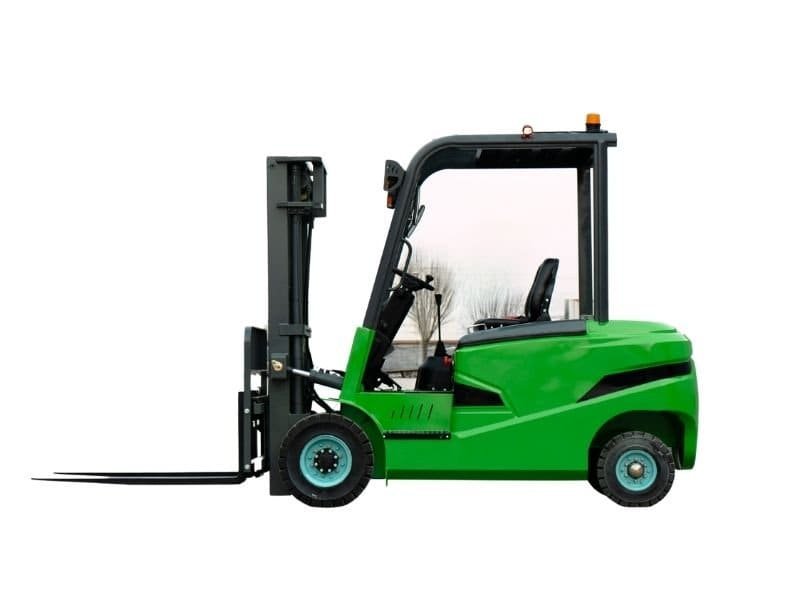
Qisheng lists a 3 ton diesel forklift as a product reference. Do not infer that a 2.5 ton model is currently offered; request current availability.
Build a Like-for-Like Quote
Give both sellers the same load, height, mast, tire, power and delivery requirements. Compare service and spare-parts support, not only initial price. If 2.5 tons is close to your frequent maximum, understand whether load variation or future packaging changes make a higher approved rating valuable.
Conversely, if the 3 ton truck cannot navigate the aisles or exceeds a dock limit, nominal extra capacity does not solve the site problem. A different truck type or layout may be needed.
Compare the Peak Load and the Daily Load
List ordinary pallets separately from the rare heaviest load. A 3 ton label does not mean three tons can be placed at every height and load center, while a 2.5 ton truck may be sufficient for a compact load within its approved chart. Request each candidate's capacity information for the specific pallet and mast option rather than deciding from the model name.
The larger truck can bring trade-offs in operating weight, size, purchase cost and aisle fit. Measure the narrowest route and check floor or dock constraints before assuming that spare nominal capacity is free. If the occasional heavy item needs special handling, compare that arrangement with the cost of running a larger machine every day.
Ask for like-for-like quotations with the same mast height, forks, tires, power source, attachments and delivery terms. Then compare the cost of completing the actual workload. The better model is the one whose approved configuration covers the work with a sensible route and support plan, not necessarily the one with the highest number in its title.
Frequently Asked Questions
Is a 3 ton forklift always better than 2.5 ton?
No. Capacity, dimensions and site fit must be weighed together.
Does the larger truck lift three tons to full height?
Only if its approved capacity data supports that load at the required center and height.
Discuss Your Forklift Requirements
Send your load weight, lift height, aisle width, duty hours and destination to Qisheng. Request a configuration and quote.