What Is a Forklift? Uses and Basic Components
News
Quick Answer
A forklift is a powered industrial truck that lifts, carries and places loads with forks. Choosing one starts with load weight, lift height, floor conditions and available space.
What the Machine Actually Does
A forklift moves a load by sliding its forks under a stable pallet or another approved load interface, raising it with a mast and carrying it over a short worksite route. The counterweight at the rear helps balance the load in front. That balance is not unlimited: the truck's data plate states capacity for a defined load center and configuration.
For a warehouse receiving pallets, the useful question is not simply “can it lift two tons?” Ask how heavy the pallet is, where its center of gravity sits, how high it must go and whether the truck can turn in the available aisle. A forklift is not a general-purpose crane or personnel lift.
Main Parts and Common Applications
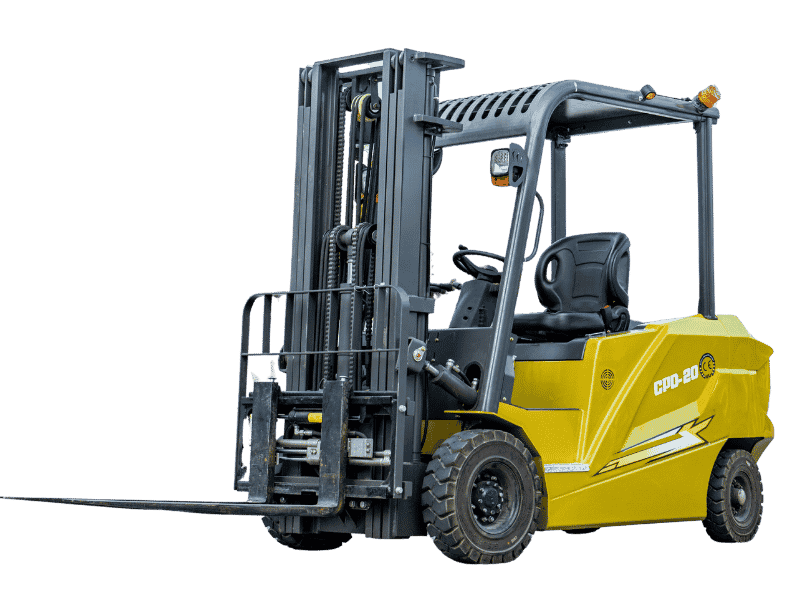
Most counterbalance trucks have forks, a carriage, mast, hydraulic system, operator position, tires and a power source. Electric trucks often suit indoor work where site ventilation and noise matter; diesel trucks are usually considered for suitable outdoor or well-ventilated work. Surface, duty cycle and local rules still determine the right choice.
| Work step | What to check |
|---|---|
| Receive pallets | Pallet dimensions and actual loaded weight |
| Store goods | Highest required rack position and mast clearance |
| Move outdoors | Ground firmness, gradient and tire suitability |
A pallet jack can move a pallet at floor level but does not replace a forklift for high stacking. A reach truck may be a better match for tall racks and narrow, smooth aisles. These distinctions prevent a buyer from paying for a truck that fits the weight but not the workflow.
First Measurements to Collect
Record the heaviest typical load, its length in the fork direction, the highest placement height and the lowest doorway. Then measure the clear working aisle—not only the nominal rack spacing—and note whether the truck enters containers, loading docks or uneven yards. Ask the supplier for a configuration-specific data plate and turning/aisle information.
The 2 ton electric forklift is one counterbalance example, not a universal recommendation. A specification sheet should be checked against the actual load and site before comparing prices. Operators also need training and authorization under applicable rules; in the United States, see OSHA's powered industrial truck rule.
A Receiving-Dock Example
A buyer receiving mixed pallets may see a 2 ton rating and assume every 1.8 ton pallet is suitable. That conclusion leaves out the pallet's depth, the position of its center of gravity, the attachment on the truck and the height at which the load will be placed. The useful comparison is the load against the capacity information for the exact truck configuration, not the largest number in a headline.
Walk through one complete movement before asking for a quotation: trailer floor to dock, dock to staging, staging to rack and the return route. Mark the tightest turn, the lowest opening and the highest placement. If a pallet must be picked from one side of a trailer or moved over a dock plate, mention that as well. Those details can change which truck family is appropriate even when load weight stays the same.
Forklifts also create obligations after delivery. The buyer needs an inspection routine, operator training, a place to charge or fuel, and a route that separates people from moving equipment. These are part of the equipment decision, not optional extras that can be considered after purchase.
Frequently Asked Questions
Is a forklift the same as a pallet jack?
No. A forklift can raise a load to a specified stacking height; a conventional pallet jack mainly moves pallets near the floor. Check the particular equipment's rated application.
What is the first specification to verify?
Start with rated capacity at the required load center and height, then confirm aisle fit, doorway clearance and the power source.
Discuss Your Forklift Requirements
Send your load weight, lift height, aisle width, duty hours and destination to Qisheng. Request a configuration and quote.