Can a Mini Excavator Dig Frozen Ground?
Qisheng Machinery · Updated October 17, 2026
Quick Answer
A mini excavator can excavate some frozen ground when the actual material, fitted tool and carrier are suitable for the assessed task. Frost conditions vary, so there is no universal air temperature, frost thickness or machine class that establishes success.
Separate three questions: can the proposed tool break the material, can the carrier perform that duty, and can the excavation remain stable as conditions change? Starting the engine successfully answers none of them.
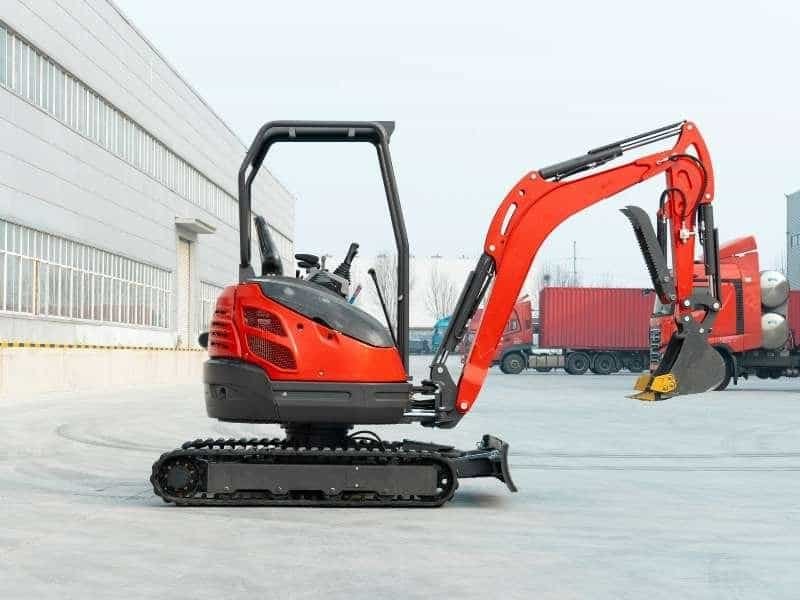
Mini Excavator Frozen-Ground Assessment
Record the conditions along the whole excavation, rather than assuming that one exposed patch represents the route. Distinguish a surface crust from deeper frozen material, buried ice or mixed soil.
| Site information | What to establish | Decision it supports |
|---|---|---|
| Frozen layer | Measured thickness and variation along the work | Material preparation and tool selection |
| Ground material | Soil, rock, moisture, ice and obstructions | Whether the proposed method is appropriate |
| Buried services | Identified locations and permitted work method | Where excavation or powered tools can be considered |
| Standing area | Support, traction, slope and nearby edges | Machine position and access |
| Excavation and thaw | Support, water and changing ground conditions | Inspection and reassessment arrangements |
| Material route | Spoil handling, storage and required finish | Scope beyond breaking the first layer |
A weather forecast does not measure the frozen layer. Avoid accepting a fixed centimetre limit as a capability specification unless the exact machine/tool documentation and assessed conditions support it.
Choose the Preparation Method for the Material
Bobcat's official ripper guidance describes a compact-excavator ripper concentrating force through a single tooth to loosen hard or frozen material, followed by bucket cleanup. It distinguishes that tool from a loader-mounted scarifier and requires the correct carrier compatibility.
That is a named tool application, not proof that every small QS carrier can perform it. Confirm the actual mount, carrier approval and intended duty before using a ripper. A hydraulic breaker additionally needs the correct hydraulic service and approved pairing.
Depending on the site, the suitable approach may involve an approved preparation tool, a specialist thawing service, a different carrier or postponing the work. A bucket alone should not be promised to penetrate an unspecified frozen layer.
Do not treat slow progress as a reason to increase force or improvise an attachment arrangement. Have the responsible person review the method when the actual material differs from the plan.
Separate Frozen-Layer Volume from Excavation Output
As a hypothetical scope calculation, a 10 m route with a 0.40 m width and an assumed uniform 0.15 m frozen layer contains 0.60 m³ of that layer. This describes an ideal geometric slice, not the amount a machine can break per hour.
The thickness would need to be measured at the real site. The calculation does not give material mass, loose volume, the remaining excavation or a production rate. Record breaking/preparation and bucket removal separately when estimating the job.
A comparison of mini excavator sizes should therefore start with a defined tool duty and site arrangement. Nominal weight, engine power or maximum digging depth alone cannot establish frozen-ground capability.
Locate Services and Reassess Ground Conditions
Frozen surfaces can conceal the work area; they do not remove underground-service hazards. UK HSE's underground-service guidance emphasizes planning, trained use of locating equipment and a suitable excavation method. The requirements and responsible authorities at the actual location still apply.
Keep changing conditions in the work plan. Water, loose material, an altered standing area or thawing can require the excavation method and support arrangements to be reassessed. HSE's excavation guidance also explains why ground cannot be assumed to stand unsupported and why nearby plant loading and water need consideration.
Those are UK sources for the stated principles, not a universal trench-support design or a fixed stand-off distance for every site.
Prepare the Exact Machine for the Temperature
Use the applicable engine and machine instructions for fuel, fluids, starting, warm-up, working limits and shutdown. Obtain the required low-temperature information for the actual configuration; this article supplies no universal oil grade or timed warm-up procedure.
Before work, identify ice or packed material affecting the undercarriage and follow the maker's inspection and cleaning instructions. Resolve frozen or abnormal controls, damaged hoses or other faults through the appropriate service process rather than forcing operation.
The hydraulic-oil guide explains why the correct fluid depends on the machine and operating conditions.
Frequently Asked Questions
Can a mini excavator dig frozen ground without a breaker?
Some assessed tasks may use another suitable method or tool. The absence or presence of a breaker does not establish the outcome for unknown ground.
Does a new mini excavator guarantee winter capability?
No. The actual configuration, temperature requirements, tool and site method still need to match the task.
Can I use air temperature to choose the excavator?
It is relevant to machine preparation, but cannot replace the material and frozen-layer assessment.
Related Guides and Models
Review attachment compatibility and the documented mini excavator models.
Describe the Winter Job Before Requesting a Machine
Send Qisheng Machinery the ground information, measured frozen layer, proposed tool and access limits. Ask for the relevant configuration and remaining technical information, rather than a guarantee based on a class name.