Mini Excavators for Farm Use
Choose a mini excavator for farm use around the work you repeat: drainage maintenance, small excavations, irrigation trenches or fence-post preparation. Compare the QS-12, QS-18 and QS-25 using the actual dimensions below, then send your requirements for a quotation.
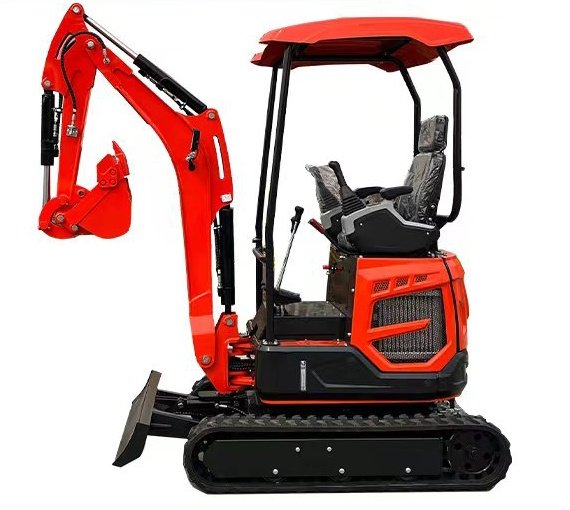
Define the Farm Work Before Choosing a Model
Record the required excavation depth, the distance from a suitable machine position to the work, and the room needed to place excavated material. Include narrow barn entrances, gate openings, tree spacing and overhead restrictions along the access route.
Ground that supports a tractor in one season may behave differently after rain or irrigation. A compact machine’s dimensions alone do not establish ground-bearing suitability, slope capability or a safe working position. Share photographs of the actual route and working area when requesting a machine recommendation.
| Farm task | Project details to establish | Equipment question |
|---|---|---|
| Irrigation trench | Bottom depth, trench width and soil | Bucket size and working reach |
| Drainage maintenance | Ditch profile, standing water and spoil area | Machine position and suitable bucket |
| Fence-post preparation | Hole diameter, depth and ground material | Auger compatibility and drive requirements |
| Small footing excavation | Excavation dimensions and nearby structures | Access, depth and positioning space |
| Property cleanup | Material type and handling method | Attachment suitability and any required load chart |
Compare Three QS Starting Points
These values are taken from the October 9, 2026 Qisheng catalog. They are specification references for the listed configuration, not production estimates or operating instructions.
| Model | Overall length × width × height | Maximum digging depth | Maximum dumping height |
|---|---|---|---|
| QS-12 series | 2,200 × 940 × 2,150 mm | 1,760 mm | 1,825 mm |
| QS-18 series | 2,250 × 1,160 × 2,200 mm | 2,100 mm | 2,100 mm |
| QS-25 series | 2,700 × 1,300 × 2,400 mm | 2,600 mm | 2,700 mm |
The QS-12 offers the narrowest listed overall width of these three series. The QS-25 provides the greatest listed digging depth. Neither comparison establishes that the machine can complete your job: working reach, ground conditions and the supplied attachment must also match.
The catalog’s dimensions must be reconfirmed if you request a different operator station, track arrangement or attachment. Ask for the actual weight and transport dimensions of the completed order before arranging a trailer or delivery vehicle.
A Deeper Drainage Requirement
Consider an assumed excavation requiring a bottom depth of 2,300 mm below the machine’s working level. The QS-12’s listed 1,760 mm and QS-18’s 2,100 mm maximum depths are below that requirement. The QS-25’s 2,600 mm maximum makes it the only one of these three to pass this initial depth comparison.
That result is a shortlist, not an approval. The QS-25 also has a listed 1,300 mm overall width. Check that it can reach the working position, work at the required horizontal reach and place spoil in the available area. If those conditions cannot be met, a different machine or method is needed.
Match the Attachment to the Material
For ordinary excavation, start by specifying bucket cutting width, mounting dimensions and the material to be dug. The catalog lists 400 mm digging buckets for the QS-12 and QS-18, and 420 mm for the QS-25.
The accessories catalog also illustrates augers, rakes, rippers, quick hitches and other tools. A listed accessory is not automatically approved for every QS model. For a hydraulic tool, request the required and available flow, pressure, connections and any return-line arrangement. For a coupler or bucket, compare pin diameters, pin spacing and mounting width.
Do not assume a small excavator will remove every stump, break every rock or lift a particular load because it can carry a certain attachment. Those operations require their own machine-specific assessment.
Confirm the Supplied Configuration and Support
Decide whether your priority is narrow access, excavation depth, operator-station enclosure or a particular tool. The current catalog shows different Basic and PRO engine configurations; request the precise engine model and the documents applicable to your destination rather than relying only on the series name.
Ask for the operating manual, parts-identification information and written warranty terms for the quoted machine. Identify the servicing arrangement before purchase, including who will perform routine maintenance and how replacement parts will be identified. Stock availability, support terms and dispatch times need confirmation in the quotation.
Buying a Mini Excavator for Your Own Farm
### Buying a mini excavator for your own farm
You can order one machine. Send your main farm tasks, access measurements, quantity and location for a model recommendation and quotation. Individual buyers can ask about warehouse supply options in Chicago, Los Angeles or Germany; current models and collection or delivery arrangements are checked for the order.
For a factory order, standard payment is 30% T/T deposit and 70% before shipment. Production and testing usually take about seven days after the deposit is received. Allow additional time for transport and delivery.
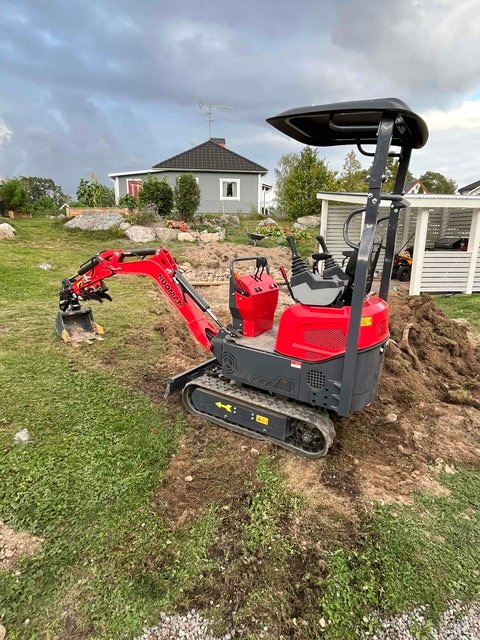
Send Your Farm Requirements
Tell us the main jobs, required depth, narrowest access, soil, preferred attachments and destination country. For port delivery, include the receiving port convenient for you. For warehouse supply, include your city or ZIP code. Confirm the machine configuration and what the quotation includes.
Compare QS models, review attachment compatibility, or request a farm-use package quote.