How Big Is A Mini Excavator
Qisheng Machinery · Updated October 18, 2026
Quick Answer
How big is a mini excavator? Check its width, height, overall length and working envelope separately. For compact Qisheng examples, the QS-12, QS-18 and QS-25 catalogue widths are 940, 1,160 and 1,300 mm. These examples do not define the whole mini excavator category: Caterpillar's mini excavator range, for instance, spans 1–10 metric tons.
Measure transport width, height and length before choosing a model. The smallest access point and trailer dimensions often decide the size more than the tonnage label alone.
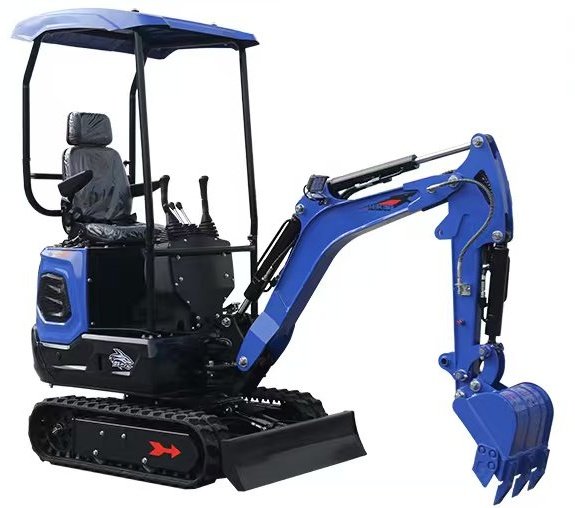
Mini Digger Dimensions: Three QS Size Examples
These figures come from Qisheng's October 9, 2026 catalogue. They describe the listed models, rather than every mini digger of the same nominal class.
| Model | Catalogue overall width | Catalogue overall height | Maximum digging depth | Catalogue overall length |
|---|---|---|---|---|
| QS-12 / QS-12 PRO | 940 mm / 0.94 m | 2,150 mm / 2.15 m | 1,760 mm / 1.76 m | 2,200 mm / 2.20 m |
| QS-18 / QS-18 PRO | 1,160 mm / 1.16 m | 2,200 mm / 2.20 m | 2,100 mm / 2.10 m | 2,250 mm / 2.25 m |
| QS-25 / QS-25 PRO | 1,300 mm / 1.30 m | 2,400 mm / 2.40 m | 2,600 mm / 2.60 m | 2,700 mm / 2.70 m |
Catalogue overall length is not a verified folded transport length or packing dimension. Confirm the boom and bucket position used for the drawing. Confirm the ordered canopy or cab, blade, tracks and attachments before using these dimensions for access. The catalogue lists retractable tracks as optional; this table does not establish a retracted or extended width for that option. Digging depth is a separate working limit, not the machine's height or a guarantee that it can excavate every trench of that depth.
For a wider comparison of mini excavator sizes and configurations, use the size chart covering tonnage, width and digging depth.
How Wide Is a Mini Digger? Overall Width and Access
Width is controlled by the tracks, blade and any attachment projecting outside them. Measure the narrowest gate, doorway and path, including hinges, posts and changes in direction. Confirm the widest part of the actual machine in the intended access configuration.
For a hypothetical route with a 1,100 mm opening and a 2,300 mm overhead beam, the QS-12 catalogue width and height are below both limits. The QS-18 exceeds the width, while the QS-25 exceeds both width and height. This is only an initial screening: actual fittings, approach angle, ground and working clearance still need checking. A model passing the two numbers is not automatically approved for the route.
Someone asking for the width of a mini digger needs this same distinction between advertised machine width and usable site clearance. See the mini excavator width guide for the access measurements to collect.
Height, Length and Space to Work
How tall is a mini excavator? In the QS examples above, catalogue overall height is 2.15–2.40 m. An enclosed cab or a different canopy can change the delivered dimensions. Do not assume a canopy folds or can be removed for access unless that configuration and procedure are confirmed.
For mini excavator transport, request a drawing showing the specified boom, arm and bucket position, plus the resulting overall length and height. A brochure's overall length or a photograph does not establish folded transport length, packing dimensions or the space needed to climb a ramp.
Check the turning radius and the space required for the machine to rotate. A compact footprint does not automatically mean it can work in a very narrow excavation. Rear swing, boom offset, bucket travel and the spoil area all need room. Transport fit and working fit are separate checks.
Tonnage Is Not a Dimension or a Weighing Record
A 1.8 ton mini excavator label identifies a nominal class; it does not by itself confirm a 1,800 kg transport load. For the QS-18 example, the catalogue provides a 1,160 mm width and 2,200 mm height. Actual operating and transport weights for the supplied configuration must be confirmed separately.
If you are asking how much does a mini excavator weigh, identify what the figure includes: cab or canopy, fuel, installed bucket, coupler and other equipment. Add separately carried attachments only if they are not already included. Use verified machine data or a weighing record for transport planning, then check the complete vehicle and trailer combination. The mini excavator weight guide covers that separate decision.
Frequently Asked Questions
How wide is a mini excavator?
The three QS catalogue examples are 940, 1,160 and 1,300 mm wide. Other models and optional track configurations differ. Confirm the delivered machine's widest component before comparing it with an opening.
What is the smallest mini excavator?
Micro machines and nominal 1-ton models serve restricted-access work, but “smallest” can mean narrowest, lightest or shortest. Specify the limiting measurement, then compare actual configurations. The name alone does not answer an access or lifting question.
How big is a 1.8 ton mini excavator?
The QS-18 catalogue example is 1.16 m wide and 2.20 m high, with a maximum digging depth of 2.10 m. These are model-specific dimensions. Confirm options and actual weight for the machine being supplied.
Does tonnage determine machine size?
Not exactly. Machines in a similar class can differ in width, cab height, rear swing and track configuration. Start with access, required digging depth, lifting capacity and transport, then compare the relevant dimensions.
Related Guides and Model Information
For a tow-vehicle question, see Can an F250 tow a mini excavator?. Browse new mini excavator models, including QS-12, QS-18 and QS-25. Request a factory-direct quotation with your narrowest opening, overhead limit and required digging depth so the proposed configuration can be checked.