How Wide Is a Mini Excavator? Complete Width, Access and Transport Guide
News | September 18, 2026
How wide a mini excavator is affects whether it can pass through a gate, work between buildings, travel along a narrow path or fit onto a standard trailer. The answer depends on more than the nominal machine size: overall width, track width, blade width, boom position and optional retractable tracks can all change the clearance required.
This guide explains how mini excavator width is measured, typical widths from 1 to 2.5 tonnes, gate and access clearance, trailer sizing, transport requirements and the points to confirm before buying or renting a compact excavator.
Quick Answer: How Wide Is a Mini Excavator?
Most mini excavators are approximately 900–1,300 mm (35–51 inches) wide. Smaller 1–1.5 tonne models are often about 940–1,100 mm wide, 1.8–2 tonne models are commonly around 1,100–1,200 mm, and a 2.5 tonne model may be about 1,300 mm wide. Optional rubber tracks, blade extensions and retractable track systems can change the final figure.
Always confirm the overall width in the machine specification sheet. Track width, blade width and attachments may increase the required clearance.
Overall Width vs Track Width
Mini excavator width is normally described in two ways. Track width is the width of one rubber or steel track. Overall width is the distance across the complete machine, including both tracks and any attachment or blade that protrudes beyond them.
Track Width
The width of the left or right track only. A 230 mm track does not mean the machine is 230 mm wide.
Overall Width
The complete operating width, usually measured across the tracks with the blade and boom in the transport position.
Access decisions must use overall width, not track width. If a machine has a 1,135 mm chassis width but the dozer blade extends beyond the tracks, the blade may be the limiting dimension at a gate or narrow path.
Mini Excavator Width by Size
The table below shows representative dimensions from Qisheng compact models. Use it as a planning guide, then confirm the exact model specification before ordering transport or quoting a tight-access project.
| Model Class | Overall Dimensions | Typical Overall Width |
|---|---|---|
| 1.2 tonne | 2902 × 940 × 2193 mm | 940 mm |
| 1.5 tonne | 2200 × 1100 × 2150 mm | 1100 mm |
| 1.8 tonne | 2250 × 1135 × 2200 mm | 1135 mm |
| 2 tonne | 2400 × 1200 × 2200 mm | 1200 mm |
| 2.5 tonne | 2700 × 1300 × 2550 mm | 1300 mm |
Compare our 1.2 Ton Mini Excavator, 1.5 Ton Mini Excavator, 1.8 Ton Mini Excavator, 2 Ton Mini Excavator and 2.5 Ton Mini Excavator.
Can a Mini Excavator Fit Through a Gate?
A small mini excavator may fit through a typical 900–1,200 mm garden gate, but the machine specification must be checked carefully. The gate opening is often narrower than the gate panel, and posts, hinges, slopes, plants or a raised threshold can further reduce clearance.
If the machine is close to the opening width, allow extra clearance for operator visibility and steering. A rubber-track mini excavator can fit through a narrow opening but still needs enough space to turn once it is inside. For tight residential work, compare the 1.2 Ton Mini Excavator and 1.5 Ton Mini Excavator.
Track Width, Stability and Retractable Tracks
Wider tracks improve stability and reduce ground pressure, which is useful on soft soil or sloped ground. Narrower tracks improve access but can make the machine feel less stable when lifting or working at maximum reach.
Some compact excavators offer retractable or variable-width tracks. This allows the undercarriage to be narrowed for transport and access, then widened for digging and lifting. Confirm the retracted width, extended width and operating limits before relying on this feature.
How to Measure a Mini Excavator Width
Measure width with the machine parked on a level surface and the bucket, blade and boom placed in the transport position recommended by the manufacturer. Record the widest component, not only the chassis measurement in the specification sheet.
Measure the tracks. Start with the distance across the outside edges of both tracks.
Check the dozer blade. A blade can extend beyond the tracks and become the limiting width at a gate.
Check the bucket and quick hitch. Measure any attachment that remains installed during travel.
Measure the entry. Record the narrowest point of the gate, doorway, alley or trailer opening.
Add operating clearance. Leave enough space for steering, visibility and small ground irregularities.
Rubber Tracks vs Steel Tracks: Width and Ground Pressure
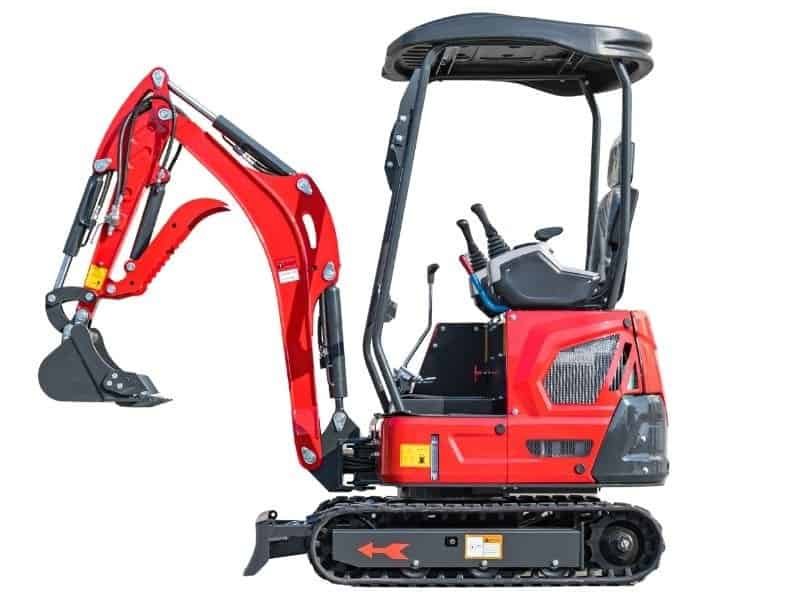
Rubber tracks are common on small mini excavators because they reduce damage to paved surfaces and provide good traction in landscaping work. Steel tracks can be more durable in abrasive or rocky conditions, but they may be heavier and less suitable for finished surfaces.
Track width affects ground pressure. Wide tracks spread the machine weight over a larger area, which can improve performance on soft soil but may reduce access through narrow openings. Verify both the track shoe width and the overall undercarriage width before selecting a machine.
Mini Excavator Transport Width and Trailer Size
Transport planning requires more than machine width. You also need to confirm operating weight, transport length, trailer deck width, trailer payload rating, ramp capacity and towing vehicle capacity.
| Model | Operating Weight | Transport Width | Suggested Trailer |
|---|---|---|---|
| 1.2 tonne | About 1200 kg | 940 mm | Small utility or plant trailer |
| 1.5 tonne | 1500 kg | 1100 mm | Trailer with adequate payload |
| 1.8 tonne | 1800 kg | 1135 mm | Plant trailer, confirm payload |
| 2.5 tonne | 2500 kg | 1300 mm | Heavy plant trailer and suitable tow vehicle |
Trailer capacity must include the machine, bucket, attachments, fuel and any loose equipment. Never select a trailer only by deck width. Read our mini excavator weight guide for size and transport planning.
How to Load a Mini Excavator on a Trailer
Loading a compact excavator requires a rated ramp, a level surface and a trailer that is coupled to the towing vehicle and secured with wheel chocks. Follow the machine and trailer manuals for the correct procedure.
• Confirm trailer payload, ramp capacity and hitch condition.
• Remove loose material and lower the bucket before loading.
• Align the machine with the trailer centerline and use a spotter.
• Move slowly with the bucket low and the machine kept under control.
• Stop once the machine is centered and the weight is distributed correctly.
• Lower the bucket, engage the controls lock and secure the machine with four-point tie-downs.
How to Secure a Mini Excavator to a Trailer
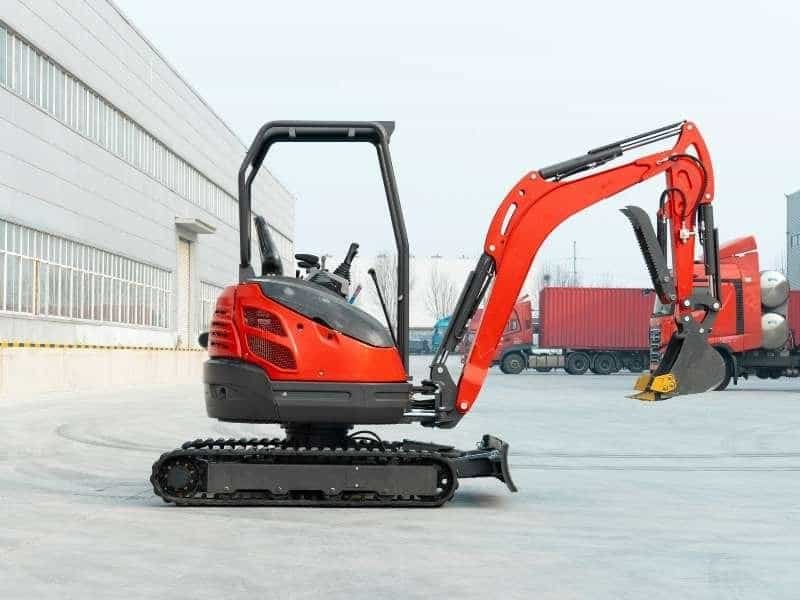
Use four separate tie-down points attached to the machine’s approved lashing points or undercarriage, not only around the rubber tracks. Use chains or straps rated for the machine weight and check them again after the first few miles.
Check Before Departure
• Coupler locked
• Safety chains connected
• Ramps secured
• Bucket locked down
• Trailer lights working
Check After 10–20 Minutes
• Straps still tight
• Machine not shifting
• Track contact stable
• No hot brakes or tire damage
• Load remains centered
If the machine width is close to the trailer deck width, leave enough clearance for straps and prevent track edges from hanging over the deck.
How Much Space Does a Mini Excavator Need for Transport?
The required space depends on the machine’s transport length, boom and bucket position, turning radius and trailer size. A compact 1.5 tonne excavator may fit on a small plant trailer, while a 2.5 tonne machine needs more deck length, payload capacity and towing capability.
Measure the transport length with the bucket curled in the manufacturer’s recommended position. Confirm the trailer deck length, width, ramp angle and payload rating, and check that the combined vehicle and trailer weight remains within legal limits.
Width Checklist Before You Buy or Rent
Measure the narrowest access. Check the actual gate, doorway, alley or path opening, not the advertised panel size.
Use overall width. Include tracks, blade, bucket, quick hitch and any attachment that remains installed.
Allow operating clearance. The machine needs space to steer, turn and position the boom after entering.
Check transport width. Confirm trailer deck width, payload and legal towing limits.
Confirm retracted width. If variable tracks are available, ask for both retracted and extended dimensions.
Watch a Mini Excavator in Action
Watch how a compact excavator moves and positions itself in a working area.
Frequently Asked Questions
How wide is a mini excavator in feet?
Most mini excavators are about 3–4.3 feet wide. A 940 mm machine is about 3.1 feet, a 1,100 mm machine is about 3.6 feet, and a 1,300 mm machine is about 4.3 feet wide.
Can a mini excavator fit through a standard garden gate?
Some 1–1.5 tonne models can fit through a suitable garden gate, but the actual opening must be measured. Posts, hinges, slopes and blade width can reduce clearance.
What is the difference between track width and machine width?
Track width is the width of one track. Overall machine width includes both tracks, the undercarriage, blade and any attachment extending beyond the tracks.
What size trailer do I need for a mini excavator?
The trailer must have enough deck length and width, plus a payload rating greater than the machine, bucket, attachments and fuel. Confirm the combined towing weight and legal limits.
Can I make a mini excavator narrower?
Some models offer retractable or variable-width tracks. The machine can be narrowed for access or transport, then widened for stability. Other models cannot be adjusted.
How wide is a 2.5 tonne mini excavator?
A typical 2.5 tonne mini excavator is approximately 1,300 mm wide, but the exact figure depends on the undercarriage, blade, tracks and attachments.
Does a wider excavator dig better?
A wider undercarriage generally improves stability and lifting capacity, but it also reduces access. Choose the narrowest machine that still provides the required reach and stability for the job.
Explore Our Mini Excavator Models
Compare compact excavators from 1 to 2.5 tonnes by overall width, working space, digging depth and attachment options.
Need Help Choosing the Right Working Width?
Send us your gate width, transport requirements and project details. We can help compare mini excavator models and prepare a factory-direct quote.
This article is for general information only. Always confirm dimensions, transport weight and towing limits from the exact machine specification and local regulations.
Looking for a New Mini Excavator?
Rental and used equipment can solve a short-term need, but a new machine gives you warranty coverage, dependable uptime, parts support, attachment options and finance choices. Compare your access width, digging depth, lifting capacity and transport limits with our new machines.