How Deep Can a Mini Excavator Dig? Depth by Size
News | September 19, 2026 | Updated October 14, 2026
Quick Answer
A mini excavator’s maximum digging depth depends on its boom, arm and bucket geometry. Qisheng’s current catalog lists 1,760 mm for the QS-12 series, 2,100 mm for the QS-18 series and 2,600 mm for the QS-25 series. These are model specifications, not depth ranges that apply to every machine in the same tonnage class.
Choose a machine that reaches the required excavation at the position where it must work. A maximum-depth figure alone does not show how far from the tracks the bucket can reach that depth.
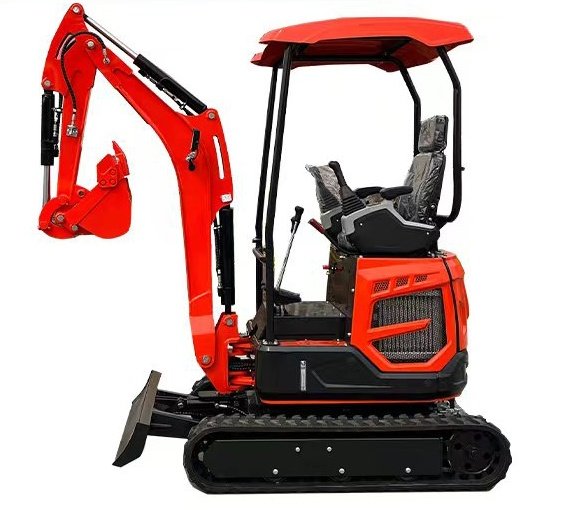
Digging Depth: Three Actual Catalog Examples
The following values are from Qisheng’s October 9, 2026 catalog. Basic and PRO versions share the listed depth within each of these series.
| Catalog series | Maximum digging depth | Maximum dumping height |
|---|---|---|
| QS-12 | 1,760 mm | 1,825 mm |
| QS-18 | 2,100 mm | 2,100 mm |
| QS-25 | 2,600 mm | 2,700 mm |
Digging depth and dumping height answer different questions. The first concerns excavation below the machine; the second helps assess whether the bucket can discharge into the intended vehicle or container. Neither replaces the working-range drawing.
If an excavation must reach 2,200 mm, the QS-18’s listed 2,100 mm maximum is insufficient. The QS-25 clears that initial depth requirement, but its reach, working position and access still need checking. Adding a larger bucket does not establish a new maximum digging depth.
Calculate the Excavation Depth the Job Actually Requires
A drainage pipe’s required cover is not the same as the depth of the trench bottom. The excavation may also need to accommodate the pipe’s outside diameter and bedding beneath it.
For an illustrative design, assume 1,000 mm of cover above a 110 mm outside-diameter pipe, plus 100 mm of bedding below it. The resulting excavation depth is 1,000 + 110 + 100 = 1,210 mm. These are assumed design inputs, not installation requirements for every drainage system.
Use the project’s drawings and specified levels for the real calculation. If the trench slopes, identify the deepest required point. A machine selected from the shallow end of the route may be unable to complete the far end.
Check Reach and Working Space Alongside Depth
Ask for the working-range diagram for the exact arm and bucket configuration. Locate the planned excavation relative to the machine’s permitted working position, then check whether the bucket can reach the required bottom and profile.
Maximum digging depth and maximum vertical-wall depth are separate specifications. The deepest point of a curved bucket path does not prove that the machine can excavate a vertical face to that same depth. Bobcat’s size and specification guide also treats digging depth and reach as distinct selection criteria.
Access can rule out a machine that otherwise reaches the target. The QS-25 catalog lists a 1,300 mm overall width; its extra depth is of little use if the machine cannot enter or be positioned at the work area. Check the width guide before arranging delivery.
Ground conditions, buried services and excavation support affect how the work can be carried out. Those conditions belong in the site assessment; a brochure depth is not approval to excavate beside an unsupported trench.
Frequently Asked Questions
Can a 2.5-ton mini excavator dig 3 metres deep?
Some models may, but that figure cannot be assumed from the class name. The QS-25 catalog lists 2,600 mm, so it should not be selected for a 3,000 mm requirement on that basis.
Does a PRO engine mean greater digging depth?
Not automatically. In the QS-12, QS-18 and QS-25 catalog sheets, the Basic and PRO versions have the same listed maximum digging depth. Compare the working equipment specifications separately from the engine option.
Source and Model Enquiries
Model figures: Qisheng mini excavator catalog, October 9, 2026, QS-12, QS-18 and QS-25 specification sheets. The drainage calculation uses stated assumptions.
Send Qisheng the deepest excavation level, access width and a site sketch to request a configuration and working-range drawing for your project.