How to Check Hydraulic Fluid on a Mini Excavator
Qisheng Machinery · Updated October 18, 2026
Quick Answer
Here is how to check hydraulic fluid on mini excavator models: identify the hydraulic reservoir and use the machine position, temperature, engine state and gauge specified in the exact operator's manual. Read the indicated level under those conditions before deciding whether oil needs adding. The engine-oil dipstick, coolant tank and final-drive oil plugs serve different systems.
This guide focuses on obtaining a meaningful level reading and recording it. Oil selection belongs in the hydraulic oil guide; a low reading does not establish which oil grade or quantity to buy.
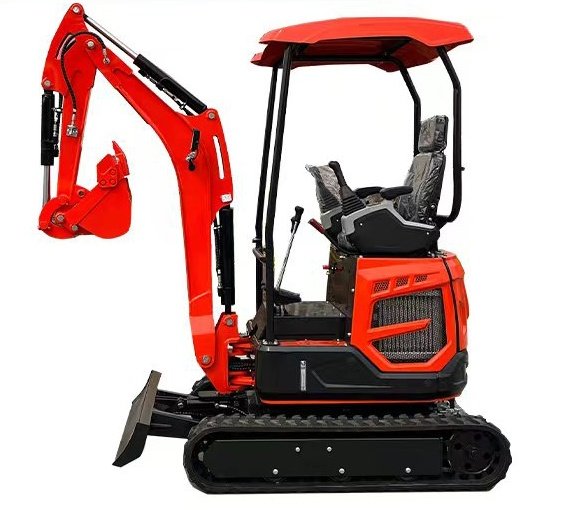
Identify the Reservoir and the Checking Conditions
Check the model plate and manual version, then locate the hydraulic tank and its level indicator in the maintenance diagram. Some machines use a sight gauge, others a dipstick or another specified arrangement. Identify the target mark or range rather than assuming every indicator should be filled to the top.
| Item to confirm | Why it matters |
|---|---|
| Ground and machine attitude | A tilted tank can produce a misleading reading |
| Boom, arm, bucket and blade position | The amount of oil held in the cylinders changes with their position |
| Oil temperature | The specified reading condition matters when comparing levels |
| Engine and control state | Use the checking procedure for that model |
| Correct gauge and target mark | Another reservoir or a different mark does not answer the hydraulic-level question |
Where the manual calls for level ground, lower the attachments into its specified position and stop the engine as directed. Do not move a disabled machine or an unsupported attachment merely to imitate a diagram. Arrange assistance if the required checking position cannot be achieved safely.
A Named Manual Example
The Kubota KX040-4 operator's manual, code RD158-8121-3, printed page 66, gives a specific daily-check example: firm, level ground, attachments and blade lowered, engine stopped, and the gauge centre mark at a stated normal temperature of 10–30°C.
That example shows why “check it hot” or “fill between two marks” is incomplete without the matching instructions. The same page treats the engine dipstick separately. Its five-minute engine-oil wait must not be copied into the hydraulic-oil check.
These are Kubota instructions for the named manual version. For a QS machine, obtain the matching tank diagram, checking posture, temperature condition and level mark from the supplier; the example does not establish those details for QS-12, QS-18 or QS-25.
Read and Record the Level
Clean the outside of the indicator so the mark and oil boundary can be seen. Read it from a suitable viewing position without entering a crush area or reaching across hot or moving components. If the gauge appears completely full, empty or unreadable, establish what the display means before adding oil.
Record the date, hour-meter reading, machine identification, manual reference, checking condition and observed level. A clear photograph of the indicator and a separate view of the machine posture make a remote service enquiry more useful.
For example, a note saying “below the specified lower mark, engine stopped, posture and temperature checked against the manual” gives a technician more information than “needs hydraulic oil.” Record the actual amount and exact product only if a top-up is subsequently performed using the approved procedure. This is a record format, not a report of a customer repair.
Respond to a Low or Uncertain Reading
Use the fluid and filter specified by the manufacturer. Before any top-up, confirm the oil already in the system, the approved fill procedure and how tank pressure is handled. A tank capacity in litres is not the amount needed to correct a low level.
If the fluid level drops repeatedly, investigate the cause rather than continuing to add oil. Report visible leakage, foaming, an unusual appearance, warning messages or abnormal operation. Colour alone does not diagnose water contamination or internal wear; the technician may require an oil sample and further checks.
Keep leak diagnosis separate from routine level reading. The HSE hydraulic-fluid guidance identifies injection hazards and calls for suitable pressure-release and maintenance instructions. Do not search a pressurised circuit by hand or substitute a generic cardboard test for a controlled diagnostic procedure. See the parts and maintenance guide for service-information preparation.
Frequently Asked Questions
Can I check the fluid with the engine running?
Use the exact checking instructions. The named KX040-4 example requires the engine stopped; that is not permission to transfer every other part of its procedure to another machine.
Should I fill the sight glass completely?
Only fill to the specified target under the specified conditions. A centre mark, a range and a full-window appearance are not interchangeable instructions.
Does a low level mean I should change the oil?
Not by itself. Level, oil condition, service interval and leakage are separate questions. Record the reading and obtain the correct response before adding or draining fluid.
Related Guides and Model Information
For the QS-12, QS-18 or QS-25, contact Qisheng Machinery with the model plate, gauge photograph and checking conditions when requesting service information. If comparing a new mini excavator, request a factory-direct quotation together with the maintenance documents for the offered configuration.