How to Level Ground with a Mini Excavator
News · Updated October 16, 2026
Quick Answer
To level ground with a mini excavator, establish the required finished levels, identify where material must be removed or added, and work against a measured reference. A suitable bucket or blade can move and shape soil, but checking levels, managing drainage and compacting placed material are separate parts of the job.
“Level” does not always mean perfectly horizontal. A garden, path or base may need a specified fall. Confirm the intended finish before moving soil, and follow the machine's operating manual and the site's work plan.
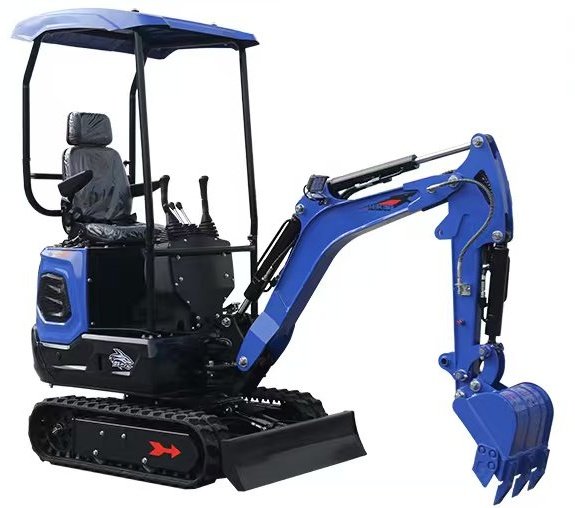
Establish the Finished Surface Before Grading
Mark a reference that can be checked throughout the work. Record the required levels at several points rather than judging the surface from the operator's seat. Allow for the finished layers: an excavation for a patio base and a finished lawn are different tasks even when they occupy the same area.
Check buried services and the work area before excavation. In the United States, OSHA's excavation requirements address locating underground installations before opening an excavation. Use the applicable local arrangements for the project location.
Separate the Main Stages
| Stage | Main question | Check before moving on |
|---|---|---|
| Survey and layout | What should the finished levels and drainage direction be? | A clear reference and project requirements |
| Material removal | Which high areas need cutting? | Required depth and where removed material will go |
| Material placement | Which low areas need suitable fill? | Material suitability and the specified placement method |
| Compaction | How will placed material be compacted? | Equipment and acceptance requirements for the intended surface |
| Finishing | Where are small corrections still needed? | Measurements across the area, not appearance alone |
Use controlled corrections and recheck the reference regularly. Do not treat the excavator's tracks or bucket as a substitute for the compaction process specified for the project.
Match the Bucket or Blade to the Work
A digging bucket is useful for excavation, while a compatible smooth-edged grading bucket is intended for shaping and finishing. Caterpillar describes its mini excavator grading buckets for grading and finishing applications. That description does not make a Cat bucket compatible with a QS excavator.
For final shaping after excavation, compare grading beam width and roller arrangements with the specified finish and working space.
Bucket width, empty weight and mounting must suit the machine. A wider bucket can cover more surface in one pass, but width alone does not establish productivity or suitability. Refer to the bucket width and capacity guide before specifying an attachment.
A fitted blade can assist with material placement and rough shaping within the machine's approved use. Confirm the blade arrangement and operating instructions; do not assume that a compact excavator provides the same grading functions as a dedicated dozer or a machine with automatic grade control.
Estimate the Amount of Material
For an illustrative rectangular area measuring 6 m × 4 m, an average cut of 50 mm gives a geometric volume of 6 × 4 × 0.05 = 1.2 m³. This estimate describes the original volume, not the final loose spoil volume or the number of bucket cycles.
Use the calculation to plan spoil handling and access. A small excavator may perform the excavation while a loader or dumper handles longer-distance material movement. The best equipment combination depends on how far material must travel and the room available.
Choose the Machine Around Access and the Task
The Qisheng catalogue lists QS-12 width at 940 mm, QS-18 at 1,160 mm and QS-25 at 1,300 mm for the stated configurations. These measurements help shortlist a machine for the access route. They do not establish grading accuracy, ground-bearing suitability or attachment capacity.
For landscaping work, consider the working area, required excavation depth, surface conditions, spoil location and compatible finishing tool together. Allow operating clearance around walls and fences instead of treating the catalogue width as the required gap.
Frequently Asked Questions
Can a mini excavator level a garden?
It can excavate and shape material where the machine and attachment suit the work. The project still needs measured levels, a drainage arrangement and any required compaction or final preparation.
Why does the surface look smooth but measure incorrectly?
A smooth finish can still contain high or low areas. Check the reference at multiple locations and across the intended drainage direction before accepting the work.
Is a bigger grading bucket always better?
No. Match its width, weight and mounting to the machine and the material. An oversized attachment can be unsuitable even if it fits mechanically.
Plan a Grading Configuration
Send the area dimensions, intended finished surface, access restrictions, main material and destination. Request a machine and attachment proposal and compare the QS-12 and QS-18 against the actual task.