Mini Excavator Bucket: Width and Capacity Guide
News · Updated October 16, 2026
Quick Answer
Choose a mini excavator bucket size by the excavation width, material, required finish and the machine's approved attachment configuration. Width describes the cut; capacity describes a rated volume. A wide, shallow grading bucket can therefore have a different capacity and purpose from a narrower digging bucket.
Do not choose a bucket solely because it is advertised for the same tonne class. Its mounting, empty weight and expected material load must suit the exact excavator and coupler.
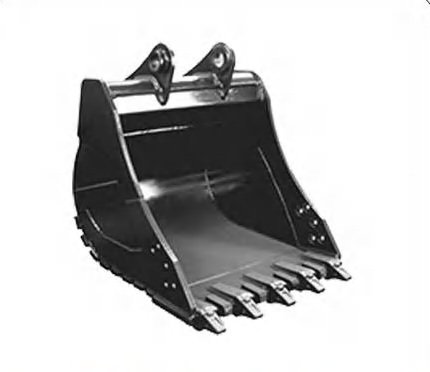
Decide What the Bucket Must Do
| Main task | Useful selection question | What to verify |
|---|---|---|
| Drainage or utility excavation | What width does the project require? | Trench design, clearance and compatible cutting width |
| General soil excavation | Can the machine work effectively with this bucket in the expected material? | Approved bucket size, empty weight and material conditions |
| Grading and surface cleanup | Is a smooth cutting edge suitable for the finish? | Compatible grading-bucket width and operating limits |
| Abrasive or difficult ground | Is the bucket built for the material? | Duty rating, cutting edge, teeth and wear protection |
A narrow trenching bucket can reduce unnecessary excavation when it matches the project. It does not determine the trench design. Required bedding, pipe clearances and the excavation arrangement must be established for the job.
Bucket Width Is Not Bucket Capacity
Two buckets of equal width can have different depths, profiles and rated volumes. Ask for the manufacturer's capacity figure and whether it is a struck or heaped rating. Comparing one bucket's struck volume with another's heaped volume gives an inconsistent comparison.
Bobcat's published excavator-bucket guidance distinguishes width, rated capacity and mounting measurements. The same questions are useful when requesting a Qisheng attachment quotation; Bobcat specifications do not establish compatibility with QS machines.
For the measurements needed to identify a mounting or coupler, see the separate bucket sizes and dimensions guide. This article focuses on choosing width and volume for the material and task.
Use the Catalogue Bucket Width as a Starting Point
| Qisheng series | Bucket width listed in the October 9, 2026 catalogue | What remains to be confirmed |
|---|---|---|
| QS-12 | 400 mm / approx. 15.7 in | Bucket capacity, empty weight, mounting and supplied edge |
| QS-18 | 400 mm / approx. 15.7 in | Bucket capacity, empty weight, mounting and supplied edge |
| QS-25 | 420 mm / approx. 16.5 in | Bucket capacity, empty weight, mounting and supplied edge |
Inch values are rounded conversions, using 25.4 mm per inch. The catalogue provides width for these configurations, not a complete capacity or compatibility table. It also does not make a 400 mm bucket suitable for every QS-12 or QS-18 arrangement. Confirm the actual bucket and coupler in the quotation.
Consider Material Weight Alongside Volume
The material in a filled bucket adds to the bucket and coupler weight. For a simple illustration, a volume of 0.020 m³ multiplied by an assumed bulk density of 1,600 kg/m³ equals 32 kg of material. The same volume at an assumed 2,000 kg/m³ equals 40 kg.
Those are arithmetic examples, not measured Qisheng bucket capacities, soil test results or safe loads. Moisture and material composition affect density, and an actual bucket may not fill to its rated volume. Neither calculation establishes the machine's lifting capability or suitability at a particular reach.
Request the correct attachment limits and machine documentation. Use the lifting-capacity guide for the distinction between an equipment class and a machine-specific load chart.
Confirm the Attachment Package
Identify the bucket type, cutting width, capacity rating, empty weight and mounting arrangement. Include the coupler if one will be used. A tilting or other powered bucket also needs compatible hydraulic connections and requirements; a standard fixed bucket should not be confused with a powered attachment.
Ask which tools are included in the machine price and which are optional. A photograph showing several buckets does not establish the contents of your order.
Frequently Asked Questions
Is the widest mini excavator bucket the most productive?
Not necessarily. A wider cut can create extra excavation and a larger material load. Match the bucket to the task, material and approved machine configuration.
Can I calculate capacity from width alone?
No. The bucket profile and depth matter too. Use its published capacity and rating basis instead of estimating volume from a single width measurement.
Can one bucket dig and finish a surface?
Some jobs allow one bucket, while others benefit from separate digging and grading tools. Ask for a compatible combination rather than assuming that any wider bucket is a finishing bucket.
Request the Right Bucket
For a bucket quotation, send the machine model, coupler details, material and required trench or finishing width. For example: “QS-18, digging bucket, 400 mm catalogue width; please confirm the capacity rating, empty weight and mounting against my coupler.” The 400 mm figure identifies the catalogue option, not confirmed compatibility. Send the machine and bucket requirements to Qisheng Machinery; specify the selected mini excavator configuration and any existing tool you intend to reuse.