How to Load a Mini Excavator on a Trailer
Qisheng Machinery · Updated October 16, 2026
Quick Answer
Deciding how to load a mini excavator on a trailer starts with the actual machine mass, approved loading method and the trailer's ramp and deck requirements. Agree the loading direction and final position before the tracks reach the ramps.
Loading a mini excavator is a controlled transfer onto a suitable vehicle. It does not end with parking roughly over the axles: the agreed position must satisfy the transport combination's load distribution, and the machine must then be secured for the journey.
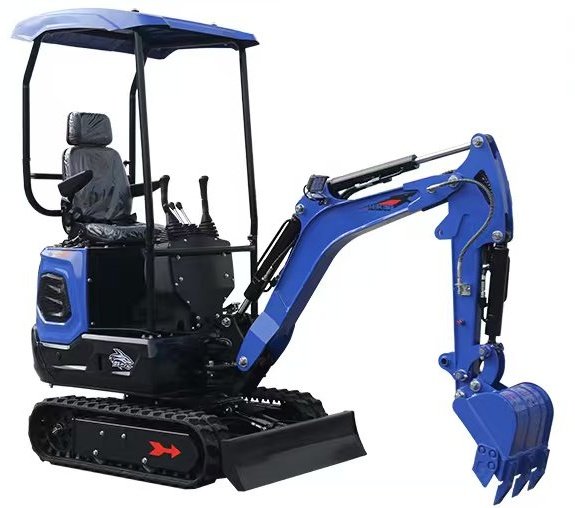
Confirm the Trailer and Ramp Arrangement
Use the excavator, trailer and ramp instructions together. A ramp pair can have a different rating basis from an individual ramp; its permitted setup, supports and attachment to the deck also matter. A long enough trailer is not necessarily a suitable loading platform.
| Loading check | Information to confirm | Reason to stop |
|---|---|---|
| Machine mass | Actual loading configuration, including fitted equipment and fluids | Only a model-class label is available |
| Ramps | Rating basis, width, length, surface and specified supports | Damage, insecure seating or an unapproved arrangement |
| Trailer setup | Coupling, immobilization and loading supports under its instructions | Vehicle movement or loss of support is possible |
| Approach | Firm ground, aligned track paths and adequate clearance | Soft ground, poor traction or an obstructed path |
| Final position | Agreed location and axle/hitch loading requirements | No checked load-distribution plan |
| Communication | Operator, loading supervisor and agreed signals where required | A person cannot stay safely visible or clear |
Qisheng's QS-12, QS-18 and QS-25 names include nominal class labels. These are not verified loading masses. Obtain the appropriate weighing or configuration record; the mini excavator weight guide explains that distinction.
Establish the Direction and Working Position
Confirm the prescribed loading direction, boom/blade arrangement and travel setting for the exact machine. Do not decide “bucket forward” or “reverse up” from another excavator's video. The upper structure's orientation can also affect how the travel controls correspond to the operator's view.
Bobcat's compact-excavator transport guidance calls for firm, level ground, suitable ramps and following the machine's Operation & Maintenance Manual. That is a useful manufacturer example, not a substitute QS loading procedure.
Establish a clear approach and keep people outside the track path, the space between ramps and the potential swing area. A trained spotter may be needed for the assessed operation, but their presence does not make unsuitable ramps safe. Agree how the operator will stop if communication or visibility is lost.
Move onto the Deck Using the Approved Method
Complete the preloading checks before approaching the ramp feet. Remove contamination that affects the specified ramp surface and verify the ramps remain correctly positioned. Do not begin when the transport vehicle or ramp arrangement can move unexpectedly.
The operator should use the machine's prescribed loading controls and speed, maintain the required alignment and stop if support, traction or visibility changes. Do not improvise steering across the ramps or use the bucket to lift the machine onto a trailer unless the particular manufacturer's loading procedure authorizes that method.
A damaged or non-driving excavator needs a separate recovery/loading plan. Towing it onto the deck is not the same operation as driving a serviceable machine up approved ramps.
Park at the Planned Position and Hand Over
Once the tracks are fully supported on the deck, complete the prescribed parking and shutdown arrangement at the agreed position. “Centered on the trailer” is not a universal axle-load calculation. The transport operator must confirm the loaded distribution and vehicle limits.
Record the position and configuration if the same combination will be used again. Reassess it after changing a coupler, attachment, loose load or trailer. Photographs can help document a checked setup, but do not establish its ratings.
Then complete the separate load-securement checks. Parking brakes, lowered equipment or hydraulic locks alone do not replace the required transport restraint.
Frequently Asked Questions
What is the best way to load a mini excavator?
Use the loading method specified for the actual machine and trailer, with a checked mass, ramp arrangement and destination position. There is no single ramp direction or parking position for all combinations.
Can I load onto a dump trailer?
Only if its manufacturer permits the arrangement and the deck, ramps, loading supports, payload and vehicle combination are suitable. The ability to close its tailgate is not the acceptance test.
What if the machine slips or a ramp moves?
Stop the operation and make the situation safe under the applicable instructions. Have the setup reassessed before attempting another movement.
Related Guides and Machine Options
Use the mini excavator transport plan before booking a vehicle, or review mini excavator models for the machine itself.
Obtain the Loading Information
Ask Qisheng Machinery for the supplied machine's configuration and applicable documents. Provide the trailer/ramp references to the transport operator so the complete loading arrangement can be checked.