Mini Excavator Transport Guide: Trailer Size and Space
Qisheng Machinery · Updated October 16, 2026
Quick Answer
Plan mini excavator transport using the actual load mass, approved stowed dimensions and the complete towing or carrying combination. Deck space is only one check: payload, axle and hitch limits, ramps, route access and unloading arrangements also matter.
Confirm what is already included in the measured machine mass. Do not add the same fitted bucket or fuel twice, and do not omit separately loaded tools. A class name such as QS-18 is not a verified 1,800 kg transport weight.
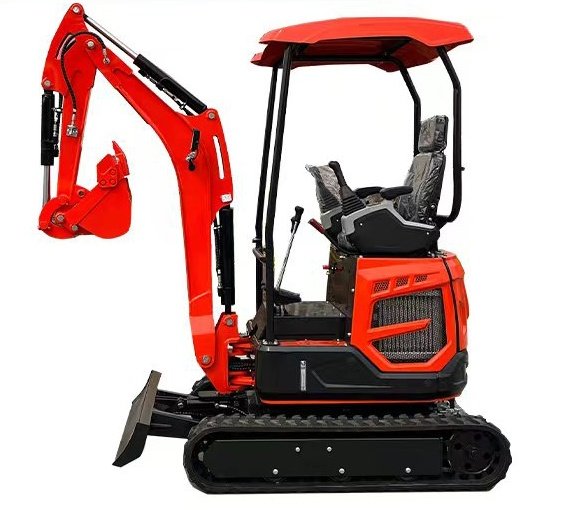
Distinguish Catalogue Dimensions from Transport Dimensions
Qisheng's v9 catalogue provides the following overall dimensions. They are useful starting references for an enquiry, but are not verified packing sizes or the complete stowed envelope for every supplied arrangement.
| Catalogue model | Overall length × width × height | Still needed for transport |
|---|---|---|
| QS-12 | 2,200 × 940 × 2,150 mm | Actual stowed position, measured envelope and ready-to-load mass |
| QS-18 | 2,250 × 1,160 × 2,200 mm | Same checks with its actual bucket, cab/canopy and options |
| QS-25 | 2,700 × 1,300 × 2,400 mm | Same checks plus any separately carried attachments |
The mini excavator weight guide separates model class, operating and transport records. Confirm the configuration in each record: a different coupler, cab or tool can change the load and envelope.
Measure the proposed transported arrangement rather than using maximum reach as deck length. Include projections and the required clearance around ramps, restraints and vehicle structures. Do not fold or remove protective equipment simply to fit without the applicable manufacturer's instructions.
Calculate Payload Before Choosing a Trailer
Read the trailer's plated limits and actual unladen mass, then account for all cargo. The allowable payload is not the same as the trailer's maximum gross mass.
As a hypothetical arithmetic example, a trailer with a 3,500 kg maximum gross mass and 900 kg actual empty mass has 2,600 kg remaining by subtraction. A 2,250 kg ready-to-load machine, 150 kg of separately carried tools and 100 kg of other cargo total 2,500 kg, leaving 100 kg on that simple gross-mass calculation.
Those assumed figures are not QS weights or approval for a towing combination. Axle loading, hitch/nose load, towing-vehicle limits, tires, brakes and other requirements must also be satisfied. A calculation that passes one limit can fail another.
Use an actual weighing record and avoid double-counting fitted equipment. Record restraints and other carried equipment where they form part of the load. If the mass basis is unclear, resolve it before booking the transport.
Check the Route and Unloading Location
Confirm the complete loaded width, length and height with the transport operator. A machine height from the catalogue is not the road-going height once it sits on a trailer deck.
Survey the route for restrictions, access turns, overhead clearance and the final unloading area. Check how the vehicle will enter, park, unload and leave. A suitable road trailer can still be unusable at a narrow, soft or steep delivery location.
Agree who provides unloading equipment and an operator. Arrival by a container truck or delivery vehicle does not automatically include a crane, suitable ramps or a service that can place the excavator at the worksite.
Keep Loading and Securement as Separate Checks
The transport plan identifies the vehicle combination, mass, position and destination. The loading guide covers the transfer onto the deck; the securement guide covers restraint and journey inspections.
Carry the applicable machine and vehicle instructions, load records and required journey documents. Have the responsible transport operator check the rules for the route and jurisdiction. This guide does not establish a universal driver-license class, tow rating or permit exemption.
For sea transport, obtain a packing and loading plan separately. Qisheng's user-confirmed same-class 40HQ references are 20 units of the 1.2-ton class, 14 of the 1.8-ton class or five of the 2.5-ton class. These are conditional planning references, not payload calculations, guaranteed capacity or a method for estimating mixed loads.
Frequently Asked Questions
How much space does a mini excavator need for transport?
Use its measured approved stowed envelope plus the vehicle's required loading, restraint and operational clearances. Catalogue overall size alone is insufficient.
Can a 1.8 ton mini excavator fit on a small trailer?
The class label cannot answer that. Check actual mass, stowed dimensions, trailer ratings and the complete carrying or towing arrangement.
Should I send the catalogue to the transport company?
Yes, as a starting reference, alongside configuration-specific measurements and mass records. Identify any catalogue figures that have not yet been verified for loading.
Model and Delivery Information
Review QS-12, QS-18 and QS-25 for the proposed machine configuration.
Prepare a Transport Enquiry
Send Qisheng Machinery the model, options and delivery destination. Ask for the actual mass and packing information needed by the transport operator before accepting the vehicle or freight arrangement.