Mini Excavator Dimensions: What to Measure Before Buying
News · Updated October 16, 2026
Quick Answer
Mini excavator dimensions need to match the whole access route, working area and transport arrangement. Record overall width, height and length, then check rear swing clearance, attachment position and the dimensions of any optional configuration. The machine's tonne class does not establish its actual size or weight.
A gate measurement is only the first check. A machine may fit through a straight opening but lack room to turn beyond it, clear an overhead obstruction or work beside a wall. Use the exact quoted configuration when making these comparisons.
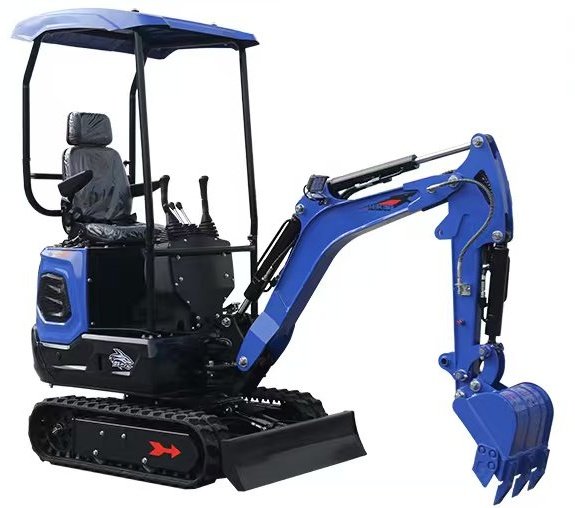
Separate Access, Working and Shipping Dimensions
| Dimension | What to compare it with | Detail to confirm |
|---|---|---|
| Maximum width in the access position | Narrowest gate, passage and transport deck | Tracks, blade and protruding equipment |
| Height in the travel position | Doorways, trees, overhead structures and loading access | Canopy or cab fitted to the order |
| Length in the specified position | Turning area, parking space and transport deck | Boom, arm and bucket position used in the drawing |
| Rear swing and working envelope | Walls, fences and nearby work areas | Clearance through the required movement |
| Packed dimensions | Freight booking and receiving arrangements | Crate, pallet, disassembled parts and separate attachments |
Keep a copy of the dimension drawing with the quotation. “Overall length” is not useful for a trailer comparison if the machine is shown in a different boom or attachment position from the one used for transport.
Compare Three Qisheng Catalogue Configurations
| Model class | Listed length × width × height | Listed maximum digging depth |
|---|---|---|
| QS-12 / 1.2 ton class | 2,200 × 940 × 2,150 mm | 1,760 mm |
| QS-18 / 1.8 ton class | 2,250 × 1,160 × 2,200 mm | 2,100 mm |
| QS-25 / 2.5 ton class | 2,700 × 1,300 × 2,400 mm | 2,600 mm |
Source: Qisheng mini excavator catalogue, October 9, 2026 v9. These are machine dimensions for the listed configurations. They are not crate dimensions, verified operating weights or dimensions for every optional cab and track arrangement.
The table provides a shortlist. Final measurements for the supplied engine, operator station, tracks and attachments should be confirmed before committing to a restricted-access job or booking transport.
Check the Whole Access Route
Measure the narrowest opening and examine the route on both sides of it. Include bends, posts, uneven edges and changes in ground level. If tracks retract, obtain the actual retracted and extended widths and check how the blade is configured; one published overall width does not establish both settings.
Consider an illustrative straight opening measuring 1,000 mm. Against the QS-12 catalogue width of 940 mm, the nominal difference is 60 mm in total, or 30 mm on each side if perfectly centred. That calculation is not an access approval: protruding parts, ground condition, steering room and necessary working clearance still require assessment. The listed QS-18 width of 1,160 mm already exceeds the opening.
For a detailed width comparison, use the mini excavator width guide. This dimensions guide covers the broader access, working-space and shipping checks.
Mini Excavator Height and Transport Planning
Compare the height of the selected canopy or cab with the complete overhead route. Do not assume a canopy can be removed or folded unless the supplier confirms the arrangement and instructions for that machine.
When the machine is carried on a trailer or truck, overall loaded height includes the carrying vehicle's deck. For freight, request the packed height, width and length rather than adding an assumed allowance to the catalogue dimensions.
Size and payload are separate checks. Obtain the machine's actual transport weight, the weight of separate tools and the complete shipment weight. The weight guide explains why a model's tonnage label should not be used as a measured load.
Frequently Asked Questions
Which mini excavator dimension should I check first?
Start with the restriction most likely to prevent the job: commonly access width or overhead height. Then assess working space, reach and transport. Passing the first measurement does not establish that the machine can complete the work.
Are overall dimensions the same as packed dimensions?
No. The packing method and transport position can change the shipping envelope. Request a packing drawing or confirmed dimensions for the exact shipment.
Does a smaller tonne class always fit a tighter site?
Compare actual dimensions. Model classes are useful labels, but they do not establish the width, height, rear swing or transport weight of every configuration.
Request a Configuration Check
Send the narrowest opening, overhead height, turning space and required digging depth with your destination. Compare the QS-12, QS-18 and QS-25, then ask Qisheng Machinery to check the proposed configuration.