Mini Excavator vs Skid Steer: Match the Work First
Qisheng Machinery · Buyer Guide · Prepared October 21, 2026
Quick Answer
When comparing a mini excavator vs skid steer, separate excavation from material transport. A mini excavator can dig below its tracks and swing the bucket to a nearby discharge point. A skid steer carries material in a front attachment and travels between collection and unloading positions. Both can use attachments, but an attachment does not remove the carrier's access, capacity or hydraulic limits.
For a mixed project, the answer may be an excavator and a loader working together. Identify the stage that limits the job before buying either machine.
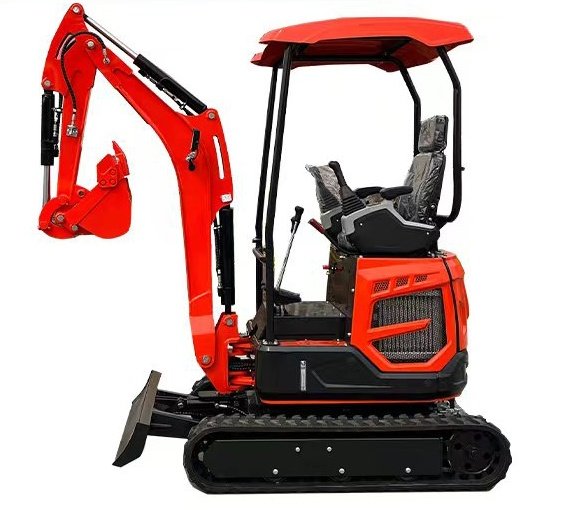
Compare the Material Route, Not Just the Bucket
The same soil can create two equipment requirements. Removing it from below ground calls for excavation geometry; moving it around a building calls for a transport route. A machine that completes the first task may leave the second unfinished.
| Work requirement | Mini excavator assessment | Skid steer assessment |
|---|---|---|
| Narrow trench below existing ground | Depth, bucket width and a suitable machine position | Approved digging attachment and resulting reach |
| Soil transfer across a yard | A separate carrier may be needed | Bucket capacity, permitted load and travel route |
| Loading a truck | Reach and dump clearance at the required position | Lift path, loading height and rated capacity |
| Finish preparation | Bucket, blade or grading tool and level reference | Suitable grading attachment and ground interaction |
| Powered attachment work | Available auxiliary circuit and approved mount | Available auxiliary circuit and approved mount |
In a skid steer vs mini excavator comparison, identify whether the loader is wheeled or tracked. A compact track loader is not simply a skid steer with identical ground behaviour. Do not infer lawn damage, traction or permitted slope from the machine category alone.
Draw the entrance, excavation, spoil pile and truck position on one site sketch. That often exposes a missing material-handling stage more clearly than a longer attachment list.
A Small Excavation Can Still Need Two Machines
Consider a hypothetical rectangular trench measuring 12 m long, 0.4 m wide and 0.6 m deep. Its geometric volume is 2.88 m³ before allowances for over-excavation or loosened soil. This is a planning calculation, not a production claim.
If a truck can stand at an accepted loading position, an appropriately configured excavator may place spoil directly into it. If the truck must remain at the street, another method must move that material. Include repeated handling, the carrying route and truck waiting time when comparing packages.
In Bobcat's Landscaping Pools LLC case, the contractor uses an E55 for excavation and T650 track loaders to transfer spoil when direct truck loading is impractical. This is Bobcat's customer example, not a Qisheng delivery or QS performance result.
The example illustrates a division of work. It does not establish that every pool needs that fleet or that a smaller machine will achieve the same output.
Compare Complete Packages Against the Same Job
For each quotation, record the carrier, bucket or tool, actual configured weight, access dimensions and transport arrangement. Then identify work outside the offer. A low equipment price can be misleading if the job still requires a hired loader, a larger excavator or additional spoil handling.
A mini excavator and skid steer combination can make sense for recurring work involving both digging and carrying. For occasional use, hiring the complementary machine may be more practical. Use your job frequency and local quotations rather than an assumed hourly income.
Keep the earnings calculation in the separate mini excavator or skid steer income comparison. Here, the first decision is whether the equipment can complete the specified work with an acceptable material route.
Frequently Asked Questions
Is a mini excavator better for digging?
It is designed around a boom, arm and bucket working below and around a stationary carrier. Confirm depth, reach and ground conditions rather than treating that design advantage as an unlimited capability.
Can a skid steer replace a mini excavator?
Only where the proposed carrier and attachment can complete the actual excavation. Compare the working envelope and setup, not the attachment's name.
Should I buy both machines immediately?
First identify the frequency of each task and the cost of hiring the missing equipment. Owning two machines is not a prerequisite for one mixed project.
Related Guides and Model Information
Use the excavator size guide for carrier selection and the bucket width and capacity guide for excavation details. Compare QS-18 and QS-25 against your measured requirements. Send Qisheng Machinery the excavation dimensions and spoil route for a factory-direct equipment quotation.