What Is The Biggest Mini Excavator
Qisheng Machinery · Updated October 19, 2026
Quick Answer
The biggest mini excavator depends on the manufacturer's category, configuration and market. There is no single cross-brand upper limit established here. Caterpillar includes a roughly 10-tonne class in its mini range; Qisheng's current 1–2.5 tonne-class sales range should not be used as an industry-wide definition.
Use a named model and its actual specification when comparing the larger end of the category. A class name is different from operating mass, shipping mass, working range or a particular attachment's permitted load.
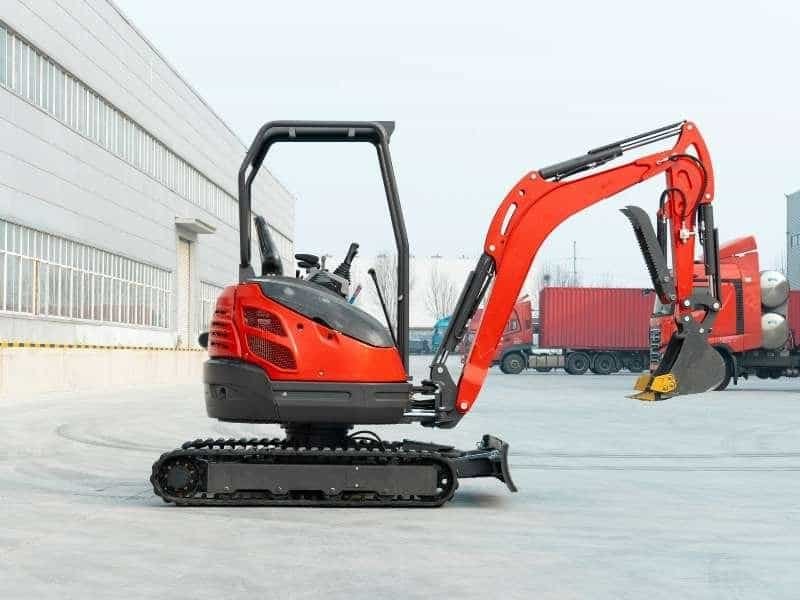
A Real Larger Mini Excavator Example
Caterpillar's mini-excavator category describes a 1–10 metric-ton range. Its US 310 Tier 4 / Stage V product page, checked October 19, 2026, lists the following configuration-specific information.
| Published Cat 310 field | Listed value | How to use it |
|---|---|---|
| Minimum operating weight with cab | 9,601 kg | Read the manufacturer's stated minimum configuration |
| Maximum operating weight with cab | 10,432 kg | Read the different maximum configuration |
| Listed digging depth | 5,211 mm | Check the stated working arrangement and diagram |
The weight notes include an operator and full fuel, and exclude a bucket; the stated configurations differ in equipment such as counterweight and track arrangement. Do not treat the figures as a packed shipment weight. These are Cat specifications, not Qisheng specifications or proof that this is the largest machine every manufacturer calls mini.
The difference between a nominal class and a configuration-specific mass explains why a product in a “10-tonne” range can have a published operating figure above 10,000 kg. It is not evidence that all category labels use the same measurement basis.
Compare the Required Work Before Choosing More Size
Start with the hardest requirement: entrance width, working position, excavation geometry, attachment needs or a documented lifting task. Then compare the relevant model data. A greater headline maximum depth does not establish productivity at every reach or suitability for every attachment.
Obtain actual transport information for the configuration you would order. Mini excavator weight must be read with its inclusion basis; a bucket, coupler, extra counterweight or alternative tracks can change the arrangement. The size chart separates the dimension fields to compare.
Qisheng's catalogue covers QS-10 through QS-25. Those model classes do not establish verified operating weights, and Qisheng is not offering the Cat machine described above through this guide. For a project beyond the documented capability of the current range, investigate a suitable larger configuration or service provider rather than stretching a model label to fit the task.
Largest and Smallest Questions
How Big Is a Mini Excavator?
The category name alone cannot answer. Confirm the model, actual width and height, working range and mass basis. The dimension guide explains the different measurements.
What Is the Smallest Mini Excavator?
Micro and narrow-access models sit at the smaller end of manufacturers' ranges, but no all-market smallest model is established here. For the smallest mini excavator in a particular shortlist, compare the exact configurations and full route, not just an advertised class.
Are the Smallest Mini Excavators Always Easier to Use?
The smallest mini excavators can have access advantages, but size alone does not establish operator competence, ground support, attachment suitability or transport arrangements. A narrower machine still needs adequate working room.
Should I Choose the Biggest Model That Fits?
Choose from the actual work and support requirements. A larger configuration can introduce different transport and operating needs, while an underspecified machine may not complete the task. Neither decision should be based on the category name alone.
Related Guides and Model Information
Compare the Qisheng product collection for the available range. For a new mini excavator enquiry, provide access restrictions, required working geometry, attachments and destination.