How to Move a Mini Excavator That Won't Start
Qisheng Machinery · Updated October 18, 2026
Quick Answer
To move a mini excavator that won't start, first establish the machine's condition and location, then have the supplier or recovery operator confirm the permitted recovery method for that exact model. Record whether the starter is silent, clicks, or turns the engine without starting it. A tracked machine must not be assumed to roll freely because its engine is off.
The practical sequence is to secure the area, identify the machine and fault, obtain the approved movement procedure, and arrange suitable recovery and transport equipment. A trailer alone does not solve how to get a disabled machine onto it.
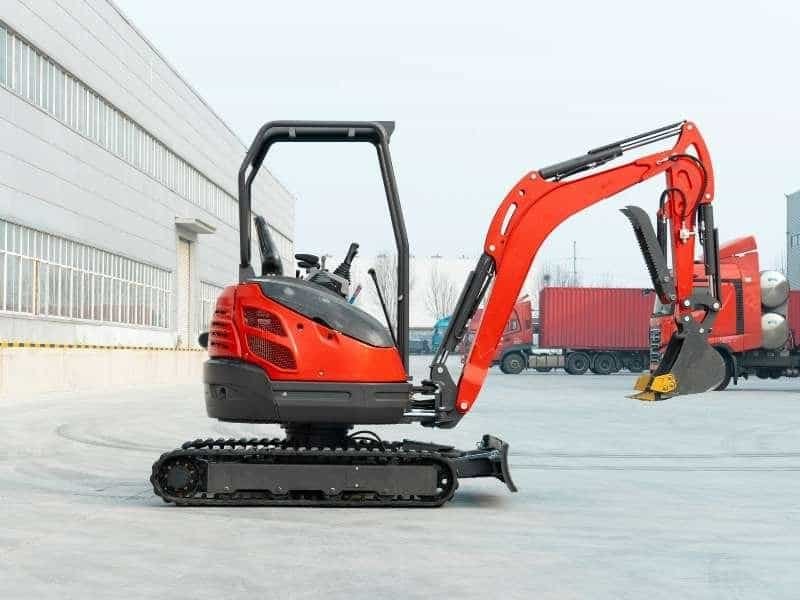
Record the Fault Before Arranging Movement
Check the manual for the normal starting procedure and record what happens during the permitted attempt. Note warning messages, visible leakage, damage, unusual sounds and the last event before the failure. Use observations rather than declaring a particular part defective.
| Observation | Useful information for the technician |
|---|---|
| No crank or a click | Instrument response and the exact starter sound; a click alone does not prove battery failure |
| Engine turns but does not start | Whether it ran out of fuel, recent servicing, displayed warnings and permitted start attempts already made |
| Engine starts but tracks do not move | This is a different fault; describe the controls, lockout indication and any damage |
| Machine stopped while working | Task, attachment, noise, warning or leak immediately before the stop |
| Machine is unstable or in a hazardous position | Ground condition, slope, excavation edge and whether the attachment is raised |
Take photographs from a safe position: the model and serial plate, engine label, whole machine, attachment, route and loading area. If further starting attempts are unsafe or outside the manual's limits, stop. Do not bypass a safety switch, bridge starter terminals or open fuel or hydraulic lines as an improvised diagnosis.
The starting guide covers normal start preparation. This page addresses planning movement when normal operation is unavailable.
Confirm the Recovery Method and Points
A towing point, lifting point and transport tie-down point can have different purposes and ratings. Do not select a point simply because a hook fits it.
As one model-specific example, the Kubota KX040-4 manual, code RD158-8121-3, printed page 55, treats towing separately from transport securement and warns that the towing point is not for lifting or tying down the machine. Its instructions are not a recovery procedure for a QS excavator.
Give the supplier the exact model, serial number, engine version and attachment configuration. Ask which procedure applies to the observed fault, which points may be used, what limits apply, and who should perform the work. Any brake-release, drive-disconnection or emergency attachment-lowering operation needs the applicable instructions and competent personnel.
If the bucket or blade cannot be lowered normally, tell the recovery operator before dispatch. Do not loosen a hose to make an attachment fall. The HSE maintenance guidance explains the need to control stored energy and support components that could fall during maintenance.
Prepare the Route and Loading Information
| Information | What the recovery operator needs to resolve |
|---|---|
| Actual machine weight and fitted equipment | Rated recovery equipment, loading equipment and vehicle capacity |
| Current machine and attachment position | Whether the planned movement is possible without additional support or preparation |
| Ground and gradient | Stability, bearing support and movement-control requirements |
| Access width, overhead clearance and turns | Whether the recovery vehicle and equipment can reach the machine |
| Distance and destination | On-site relocation, loading onto transport, and unloading arrangements |
| Confirmed recovery and restraint points | Suitable connections for each distinct stage |
Provide verified transport weight or identify it as still unconfirmed. A QS model's nominal ton class does not supply that weight. Send the current dimensions and position as well as catalogue information; a disabled machine may not be in the normal transport posture.
The recovery operator can then assess repair on site, a manufacturer-permitted controlled movement, or a planned lift and loading operation. Each choice depends on the machine and site. A crane requires a lifting plan, suitable points, rigging and access; a winch requires an approved pulling arrangement and a way to control the machine throughout movement. The HSE lifting guidance describes planning and competent supervision in its UK work-equipment context.
Complete Recovery Before Returning to Work
Agree the destination, exclusion area, communications and stopping conditions with the recovery team. Keep bystanders out of the movement area and follow the appointed operator's instructions. Do not treat “low speed on firm ground” as approval to pull the excavator with a truck.
Once the machine is loaded, its transport position, attachment restraint and securement still need checking. Use the mini excavator transport guide for the separate transport-planning stage. Record the recovery method and any damage, then resolve the original fault before returning the machine to service.
Frequently Asked Questions
Can I tow a mini excavator that will not start?
Only when the applicable procedure and recovery plan permit it. Do not infer that the tracks, drive system or brakes allow free movement from the fact that the engine is stopped.
Can I pull it onto a trailer with a pickup?
A pickup and a rope do not establish a controlled loading method. Confirm the machine procedure, pulling points, equipment ratings, ramp arrangement and movement control with the recovery operator.
What should I send when asking for help?
The model and serial number, engine identification, exact starting symptom, warning display, fitted attachments, machine position and route photographs. State what has already been tried so the technician can avoid repeating it.
Related Guides and Model Information
Use the parts and maintenance guide to prepare the service enquiry. For a QS-12, QS-18 or QS-25, contact Qisheng Machinery with the identification and site information. If assessing a new mini excavator instead, request a factory-direct quotation and ask for the operating, maintenance and recovery documentation for the proposed configuration.