Mini Excavator Ground Pressure: Read the Contact Area
Qisheng Machinery · Buyer Guide · Prepared October 27, 2026
Quick Answer
Mini excavator ground pressure describes the load distributed over the tracks' contact area. Compare the figure for the actual machine configuration, then assess the ground and travel route separately. A low catalogue pressure does not certify a lawn, buried service, suspended slab or excavation edge for machine access.
For a useful comparison, obtain the working mass, track shoe width, ground contact length and the manufacturer's stated pressure. Overall machine width is a different measurement. Extending the tracks farther apart does not automatically increase the area of rubber touching the ground.
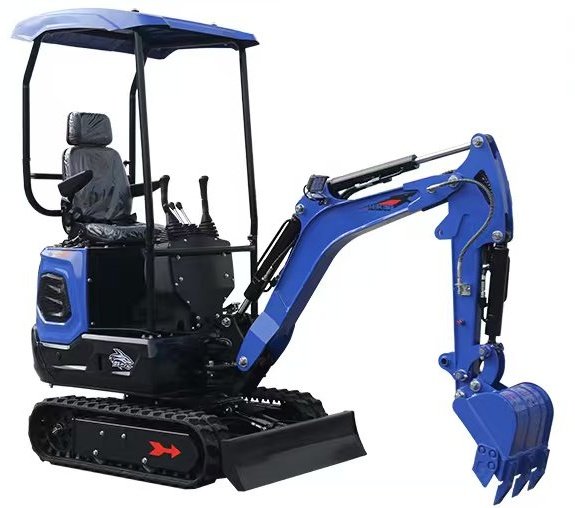
Calculate Nominal Pressure from the Right Dimensions
In a simplified stationary calculation, pressure in pascals equals machine mass in kilograms multiplied by 9.81, divided by the total contact area in square metres. For two identical tracks, ground contact area is twice the shoe width multiplied by the ground contact length. Use the length actually bearing on the ground, rather than the full belt circumference or overall undercarriage length.
Consider an assumed machine with a working mass of 1,500 kg, two 0.23 m wide tracks and a contact length of 1.20 m on each side. This is a calculation example, not a Qisheng specification or a measured field result.
| Calculation item | Assumed value or result | Meaning |
|---|---|---|
| Total contact area | 2 × 0.23 × 1.20 = 0.552 m² | Simplified rectangular footprint |
| Vertical weight force | 1,500 × 9.81 = 14,715 N | Mass converted to force |
| Nominal average pressure | 14,715 ÷ 0.552 = 26,658 Pa | Approximately 26.7 kPa |
| Added 150 kg, unchanged area | Approximately 29.3 kPa | About 10% higher nominal pressure |
This average assumes the weight is distributed across that footprint. Digging, turning, uneven ground and changes in attachment position alter the distribution. The calculation cannot establish the peak local pressure beneath an individual roller or the bearing capacity of the site.
Read a published value with the configuration notes. The Cat 301.5 specification lists ground pressure of 27.3 kPa at its minimum weight and 30.6 kPa at its maximum weight. Those are named Cat configurations, not a pressure range for QS machines or all excavators in the same size class.
Separate Ground Bearing from Surface Protection
An owner may be concerned about two different outcomes: the machine sinking into weak ground, and the surface being scuffed or broken. Rubber tracks can still mark a paved turning point. A protective mat can reduce surface contact damage without proving that the material beneath it can support the machine.
Walk the entire proposed route before choosing the working position. Identify soft fill, recently backfilled service trenches, irrigation lines, drain covers, basements and changes in ground level. Include the unloading area and the place where the machine will turn, rather than checking only the narrowest gate.
| Site question | Information to obtain | What it changes |
|---|---|---|
| Is the surface structurally supported? | Slab, cover or buried structure details and permitted loads | Whether machine access is acceptable |
| Has the ground recently been disturbed? | Backfill history, drainage and current condition | Route assessment and preparation |
| Is access close to an excavation? | Excavation design, edge condition and nearby loads | Permitted machine position |
| Are mats proposed? | Rated application, support conditions, joints and installation method | Whether the protection system suits the route |
| Where will the machine turn? | Space, surface and pedestrian separation | Travel layout and surface wear |
Do not interpret a ground-pressure figure as an edge setback. HSE's excavation guidance explains that nearby plant and other loads can affect excavation stability. The site assessment must address that loading; a wider track or lower average pressure does not remove it.
If the ground changes after rain, reassess the route. A photograph from a dry visit may no longer describe the conditions at delivery. Stop if the approved route begins to rut or lose support rather than using repeated passes to test its limit.
Compare Offers Using the Supplied Configuration
A quotation should identify the track arrangement and the mass basis behind any pressure claim. Ask whether the figure includes the operator, fuel, bucket, coupler and options. Compare the same basis across offers. Model names such as 1.2-ton or 1.8-ton class are not substitutes for verified mass.
Retractable tracks introduce another distinction. The gauge is the distance between the tracks; shoe width is the width of each belt. A wider gauge can change the machine's stance without changing the nominal contact area used in the simple calculation above. Do not calculate a lower pressure merely by multiplying the expanded overall width by the track length.
For a Qisheng enquiry, send photographs of the route, the surface type, any buried structures, the required attachment and the proposed working location. Ask for the completed configuration's actual weight and applicable ground-pressure information. The current QS class labels do not establish verified pressure values.
Use the weight guide to distinguish working and transport mass, and the access-width guide to record physical clearances. Neither replaces the ground assessment.
Frequently Asked Questions
Does a smaller excavator always have lower ground pressure?
No. A lighter machine may also have a smaller contact area. Compare both mass and footprint for the supplied versions, rather than ranking machines by tonnage alone.
Can I use ground pressure to approve a driveway crossing?
No. The pavement, base, buried structures and load restrictions also matter. Obtain an assessment of the actual crossing and any proposed protection system.
Does a wider stance mean a larger contact area?
Not necessarily. Moving the same belts farther apart changes gauge. Increasing each belt's bearing width or contact length changes the nominal area.
Related Guides and Model Information
For access planning, read the mini excavator dimensions guide. For machine selection, compare Qisheng mini excavator models, then request the actual configuration data relevant to your ground conditions.
Request a factory-direct quote: Send your country, site photographs, route restrictions and intended work to Qisheng Machinery. Ask for a configuration and delivery proposal based on those requirements.