Mini Excavator Plate Compactor: Flow and Ground Fit
Qisheng Machinery · October 18, 2026
Quick Answer
A mini excavator plate compactor needs a matched hydraulic installation and a defined ground-compaction task. Compare the tool's flow, pressure, drain requirements and installed mass first. Then agree the material, placement method and acceptance checks with the party responsible for the work.
The attachment's vibration specification describes the tool. The finished ground's required condition is a separate project requirement; it cannot be established from the machine's tonnage label or a successful unloaded demonstration.
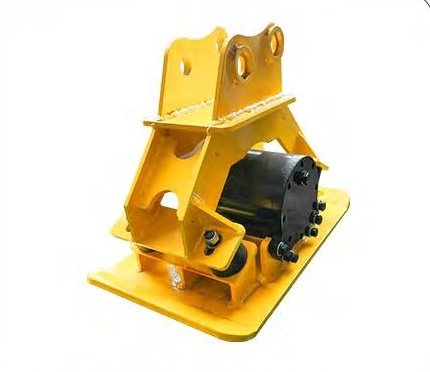
Read a Complete Hydraulic Specification
Qisheng's v9 accessory catalogue illustrates a plate compactor. It does not provide a tool model, hydraulic rating or approval on every QS configuration. Obtain those details for the actual mini excavator compactor attachment in the offer.
For a named example of the information available from a tool manufacturer, Epiroc's HC 150 non-rotation page lists the following:
| Published field | HC 150 non-rotation reference |
|---|---|
| Oil flow | 30 L/min |
| Maximum operating pressure | 150 bar |
| Product weight | 140 kg |
| Service weight | 160 kg |
| Plate coverage | 0.17 m² |
Epiroc's HC brochure, printed page 31, explains that service weight includes an average-sized adapter plate and marks the HC 150 as requiring a drainage line. These are Epiroc reference values, not QS tool specifications or a confirmed pairing.
The two mass figures show why the bare product and installed assembly need separate identification. Use the actual adapter and coupler arrangement in the carrier review. Likewise, ask the installer to compare the required hydraulic supply at the tool with the machine's documented auxiliary circuit, not its engine output or total pump-flow headline.
Check the Working Envelope and Installation
| Installation detail | What the supplier or installer should confirm |
|---|---|
| Adapter and carrier interface | Correct drawing, hardware and full installed mass |
| Hydraulic service | Tool supply, return, drainage and permitted settings |
| Controls | Required activation and stopping behavior |
| Plate and housing envelope | Actual dimensions in the planned working position |
| Hoses and isolators | Correct routing, movement and inspection access |
When selecting a plate compactor for a mini excavator, include the excavation's designed working space and the location of pipes, structures or other sensitive features. The responsible site team must determine where vibration and the proposed equipment can be used.
A rotating version, where offered, adds another function and may change mass, height and hydraulic requirements. Compare the precise version rather than assuming a rotation option has the same installation as a fixed head.
Ask for the tool's operating and maintenance instructions, adapter specification and commissioning record. The quotation should make the hydraulic and mounting work visible, including any required drain connection. The attachment compatibility checklist helps organize that review.
Define Acceptance for the Ground, Not Just the Tool
Before a representative trial, agree the material to be placed, its condition, the planned layer arrangement and the project acceptance method. Use the applicable project specification and responsible engineer's instructions for any thickness, moisture, testing or vibration restrictions.
| Stage | Record |
|---|---|
| Before trial | Material, site conditions, tool/carrier configuration and specified acceptance |
| During approved trial | Placement method and the operating record requested by the responsible party |
| After trial | Required test results, inspected area and any corrective work |
| Handover | Accepted method, equipment instructions and installation/maintenance records |
Avoid buying from a promise that one universal layer thickness or number of passes will suit every soil. A mini excavator compactor can be part of an agreed method, while the result still needs the specified evidence.
Keep excavation, backfill placement and compaction distinct in the equipment plan. A grading blade spreads or shapes material; that action alone does not establish the ground's required compaction. Include the material supply and access arrangements when comparing the complete job cost.
Frequently Asked Questions
Is a breaker circuit automatically suitable for a compactor?
Have the tool's supply, return, drain and control requirements checked against the actual machine. Matching hose connectors does not establish the complete installation.
Can attachment force establish the finished density?
No. Material, moisture, placement and the approved method affect the outcome. Use the project's specified acceptance checks.
Do all compactors need a separate drain line?
Follow the selected tool's instructions. The HC 150 brochure above explicitly requires a drainage line; that manufacturer-specific example should not be applied as a universal rule to every compactor.
Related Planning and a Compactor Quote
Review the trenching guide, ground-finishing guide and catalogue resources. Compare QS-18 and QS-25 only after the proposed tool requirements are known. Send Qisheng the compaction task, project requirements and carrier details for an identified tool and installation quotation.