Mini Excavator Hydraulic Thumb: Choose the Right Geometry
Qisheng Machinery · Buyer Guide · Prepared October 20, 2026
Quick Answer
A mini excavator hydraulic thumb moves against the bucket under hydraulic control, helping grip irregular material between the two. A rigid or mechanically positioned thumb stays in its selected position while the bucket closes toward it. The choice depends on the material, frequency of repositioning and the complete bucket-and-thumb geometry.
Choose the arrangement before discussing installation. This article addresses selection and grip geometry; the existing thumb installation guide covers the mounting information and approvals needed for fitting. Neither a generic thumb length nor a matching pin diameter proves that a kit suits the machine.
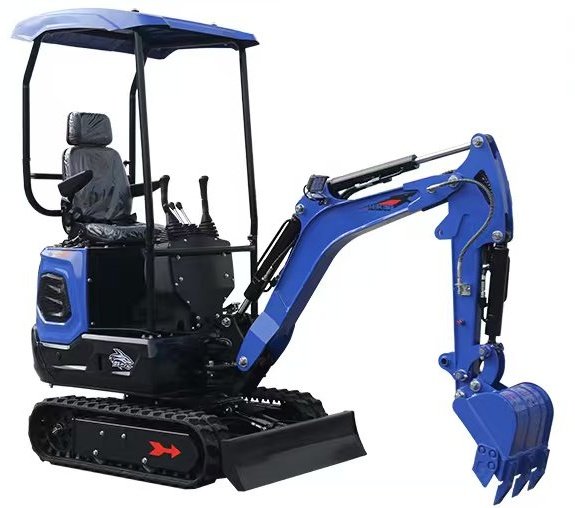
Compare Motion and Contact, Not Just the Cylinder
A hydraulic thumb for mini excavator use should be matched to the bucket's shape, tooth layout and coupler arrangement. The tines need to meet the intended part of the bucket through the required range without interference. Check the folded position as well as the gripping position.
| Selection point | Rigid/mechanically positioned thumb | Hydraulic thumb |
|---|---|---|
| Change of thumb position | Uses the approved mechanical positioning arrangement | Uses a hydraulic cylinder and controls |
| Repeated handling of varied shapes | Check whether the available fixed positions suit the work | Moving thumb can provide more positioning choices |
| Hydraulic demand | No powered thumb movement | Requires the specified circuit and protection |
| Bucket relationship | Contact path still needs checking | Contact path and cylinder travel both need checking |
| Stowed arrangement | Verify retained position and clearances | Verify retracted geometry and hose clearances |
For occasional brush handling, the simpler arrangement may cover the actual task. Frequent placement of differently shaped material can justify hydraulic positioning, provided the complete arrangement is approved. A cylinder alone is not a reason to choose a heavier or poorly matched tool.
A Published Rotation Figure Needs Its Model Name
Geith's hydraulic-thumb page describes its MXHT compact-excavator main-pin thumb family for 1–6 ton machines, with rotation up to 133°. It specifies a main-pin/direct-mount arrangement designed to mesh with bucket teeth. That is a named product-family example, not the working range of every mini excavator thumb.
The distinction matters when reading quotations. A thumb that uses a different pivot, linkage or coupler position can have a different contact path despite a similar nominal size. Request the drawing for the exact bucket and coupler in the order.
A useful supplier submission shows the open, intermediate and fully curled configurations, together with the approved stowed arrangement. It should identify any limits or interference checks rather than simply displaying the thumb fitted to a different excavator.
Turn Your Material into a Geometry Requirement
List the objects you actually expect to grip: their dimensions, shape and whether they tend to roll or bend. A bundle of brush and a short pipe create different contact problems. A wider thumb is not automatically better if its tines miss the bucket teeth or obstruct trenching clearance.
For a hypothetical drawing, a 320 mm bucket width and a 250 mm thumb width differ by 70 mm. That subtraction does not establish a defect or a safe grip. It tells the buyer to inspect tine alignment, side clearances and the intended contact arrangement rather than comparing width numbers alone.
Object mass, reach and the complete attachment package must also be assessed using the machine's applicable capacity information. A positive grip does not establish that the excavator can carry the object through every position.
Questions Buyers Ask
Can I add a cylinder to any mechanical thumb?
Do not assume the structure, pivots and stops were designed for that conversion. Obtain an approved kit or manufacturer confirmation for the exact assembly.
Should the thumb teeth line up with the bucket teeth?
Use the manufacturer's intended meshing or contact pattern. Tooth count, bucket radius and mounting position all affect it.
Is a hydraulic thumb the same as a grapple?
No. A thumb works against the bucket. A grapple has its own jaw arrangement and may have separate rotation functions; see the grapple guide.
Related Guides and Model Information
Continue with bucket compatibility and lifting information. Review QS-12, QS-18 and QS-25 as carrier options, with actual thumb availability and fit confirmed separately.
Ask Qisheng about a matched configuration, including the bucket, coupler, intended materials and required thumb movement.