Mini excavator sprockets: check wear and replacement fit
An excavator sprocket has to engage the installed track and match the final-drive mounting. Tooth count alone does not establish fit. Before ordering a replacement for a mini excavator, identify the track arrangement, mounting geometry and existing wear, then ask for the replacement drawing against the machine reference.
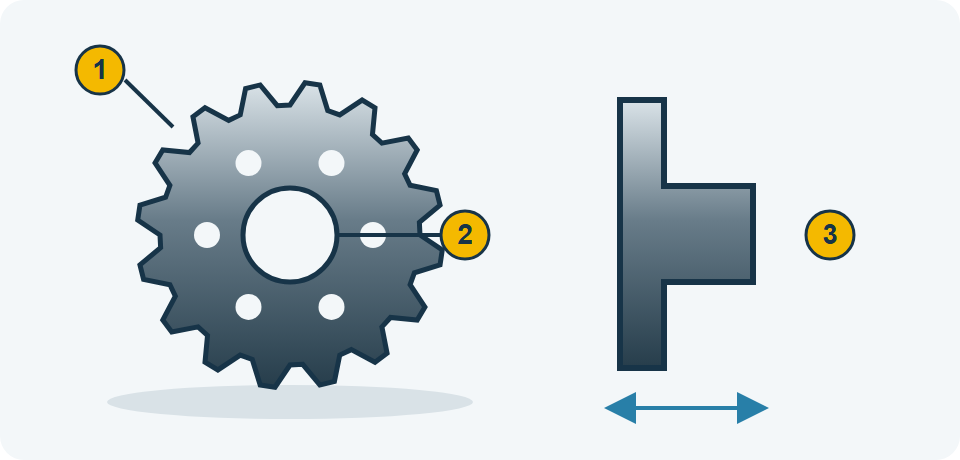
Match the track engagement and the mounting
| Area | Information to compare |
|---|---|
| Track engagement | Existing track identification, sprocket reference and manufacturer-confirmed tooth geometry. |
| Front face | Tooth count, centre opening, number and position of mounting holes, and any identifying marks. |
| Side profile | Hub shape, mounting-face orientation, thickness and offset from the mounting face. |
| Supply scope | One-piece sprocket or the specified segment arrangement; fixings included or supplied separately. |
A front photograph can conceal an offset hub. Include an accessible side view or the fitter’s removed-part photographs. Confirm which face mounts against the drive, rather than assuming that a reversible-looking wheel can be installed either way.
Document worn teeth before fitting a new track
Pointed, hooked, chipped or unevenly worn teeth warrant assessment alongside the belt or chain. Photograph several areas around the sprocket and keep the track’s service history. This gives a more useful record than a close-up of the single worst tooth.
A worn excavator sprocket may contribute to poor engagement and further track damage. Replacing a belt while leaving its cause in the running gear can repeat the failure. The inspection should also consider alignment, tension and the condition of the idler and track rollers.
Use the component manufacturer’s dimensional limits and inspection method. A photograph does not provide a universal percentage of remaining life, and the apparent condition of one tooth does not establish the repair scope.
Compare an excavator sprocket replacement quote
State whether the quotation is for the sprocket alone, a pair, or a wider running-gear repair. Confirm the exact reference, supply quantity, included fasteners and installation requirements. Keep labour and freight separate where they are quoted separately.
If the track was replaced previously, send that replacement reference as well as the original machine details. Ask the supplier to resolve any difference between the installed system and the original parts list before dispatch. The rubber-track buying guide explains the separate track-identification checks.
Send the sprocket and machine details
For a Qisheng-supplied machine, send the serial plate, front and side photographs of the existing sprocket, its part reference and the installed track marking. State whether you need one side or both. Request confirmation of the mounting, track compatibility and included parts before ordering. Send the identification request
Technical references
Vematrack: recognising undercarriage wear; DIGBITS: undercarriage replacement components