Mini excavator track rollers: identify the correct replacement
Order mini excavator track rollers from the part reference and the installed undercarriage, then check the roller position and mounting details. A matching outside diameter leaves several possible differences: the guide flanges, axle ends and fixing arrangement must also fit. Keep a photograph of the roller in position with the enquiry so the supplier can see how it works with the track.
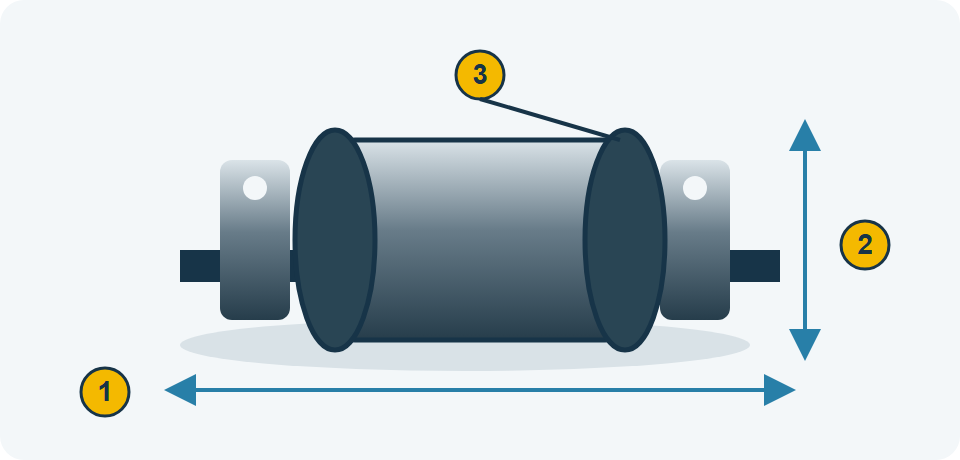
Identify the position before comparing the part
A bottom roller carries load along the lower track run. A carrier roller supports the upper return run where that arrangement is fitted. Their mounting and running profiles can differ. Include the side and position in your photographs instead of requesting only “one roller”.
The same lower-frame parts may be listed as undercarriage rollers or digger track rollers. Compare the position and flange design under either name.
For a rubber-track machine, photograph the inner guide area as well as the roller. An apparently similar flange can guide a different track profile. A replacement should retain the assigned roller position and design; changing flange types to compensate for poor tracking can leave the original fault unresolved.
Build a usable roller identification sheet
| Record | What to include |
|---|---|
| Machine identity | QS model, serial plate and any previous undercarriage replacement. |
| Installed position | Left or right side; bottom or upper carrier position; an overview photograph. |
| Part geometry | Readable reference, axle ends, mounting-hole centres and the flange profile. State measurement units. |
| Track arrangement | Rubber or steel system and the existing track identification. |
| Order scope | Complete roller assembly or body only; required fixings; quantity and delivery destination. |
Take dimensional readings only from accessible points under an appropriate service arrangement, or from a removed component supplied by the fitter. A worn running surface is useful evidence of condition but may not reproduce the original drawing dimension.
Keep the failure record with the enquiry
Photograph leakage, uneven flange contact, damaged mounting points and any roller that the fitter finds seized. Record whether the finding is isolated or appears at several positions. This helps distinguish a single damaged part from a wider running-gear problem.
The replacement decision should include the neighbouring rollers and the track. A new roller fitted among worn components can change how load is shared. The appropriate repair scope depends on inspection and the applicable service limits; it cannot be settled by the number of visibly damaged rollers alone.
Use the whole-undercarriage inspection guide for that system record. The idler identification guide covers the large guide wheel, while the sprocket guide covers the drive wheel.
Request a roller match for a Qisheng machine
Send the model and serial plate, the installed-position photograph and any legible part number. Add the number of rollers required and your delivery country. Ask for the proposed part drawing, complete supply scope and availability before approving the replacement. A machine’s nominal tonnage is not a roller part number. Send the identification request
Technical references
LIS: track-roller identification and versions; Bobcat: inspecting the running gear